When it comes to choosing the perfect engagement ring, there's a lot to think about. While you might already have a good idea about the stone shape, 4Cs, and the metal, one important decision that often gets overlooked is choosing between high setting vs low setting engagement rings. A ring's setting profile, that is, how high or low the ring sits above your finger, affects not just its overall appearance but also how comfortable and practical it will be for everyday wear.
Both have their pros and cons, and choosing between them can feel like a tough decision. In this post, we'll break down the key differences between high vs low setting engagement rings, so you can feel confident in choosing the perfect ring that suits both your personality and lifestyle.
Pros and Cons of High-Setting Engagement Rings
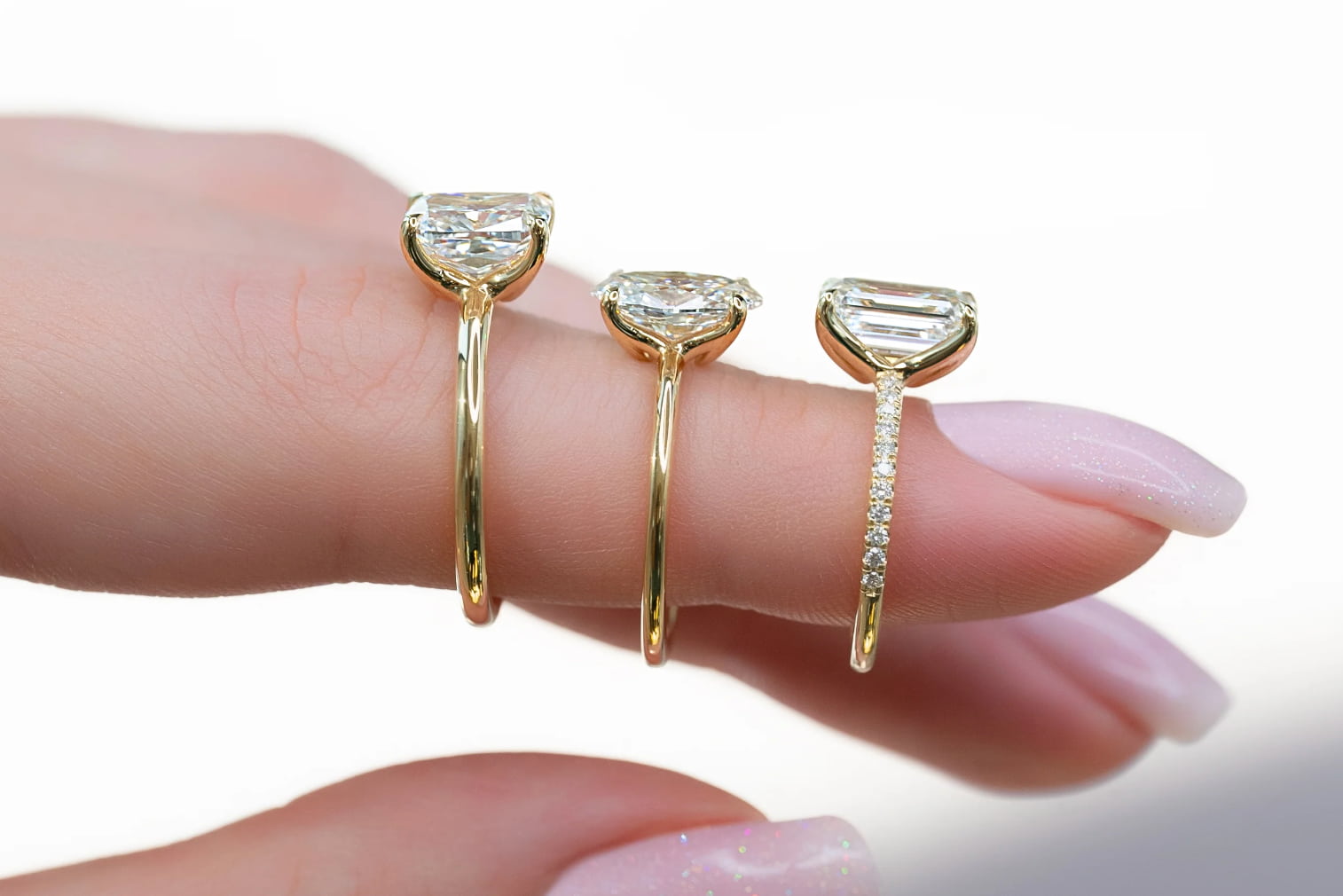
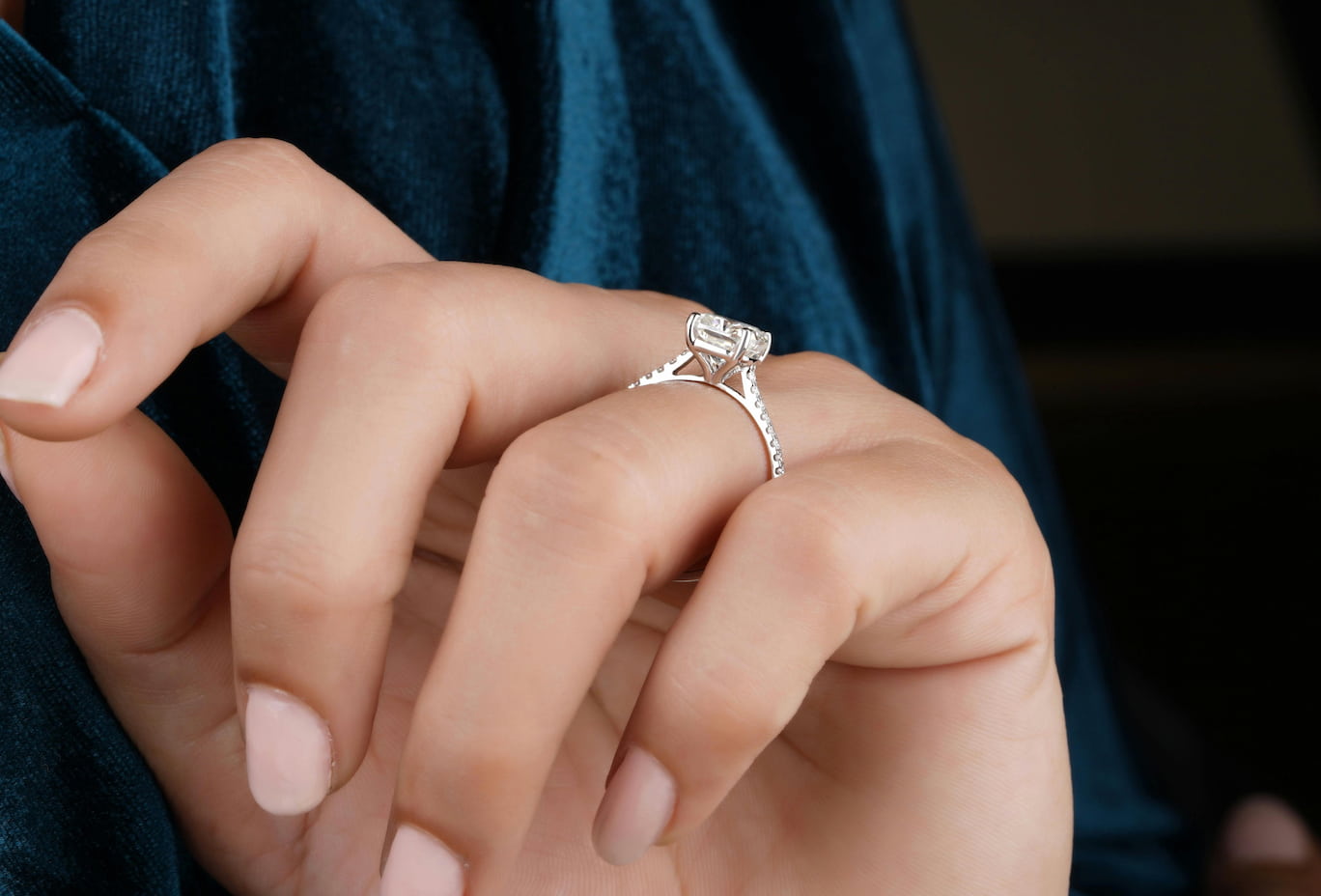
When you think of an engagement ring, chances are the image of a high-setting ring comes to mind—those rings with a gemstone sitting up above the band, often with a dramatic, eye-catching look. While high-setting rings are undeniably stunning, they come with both upsides and downsides:
Pros
Cons
Pros and Cons of Low-Setting Engagement Rings
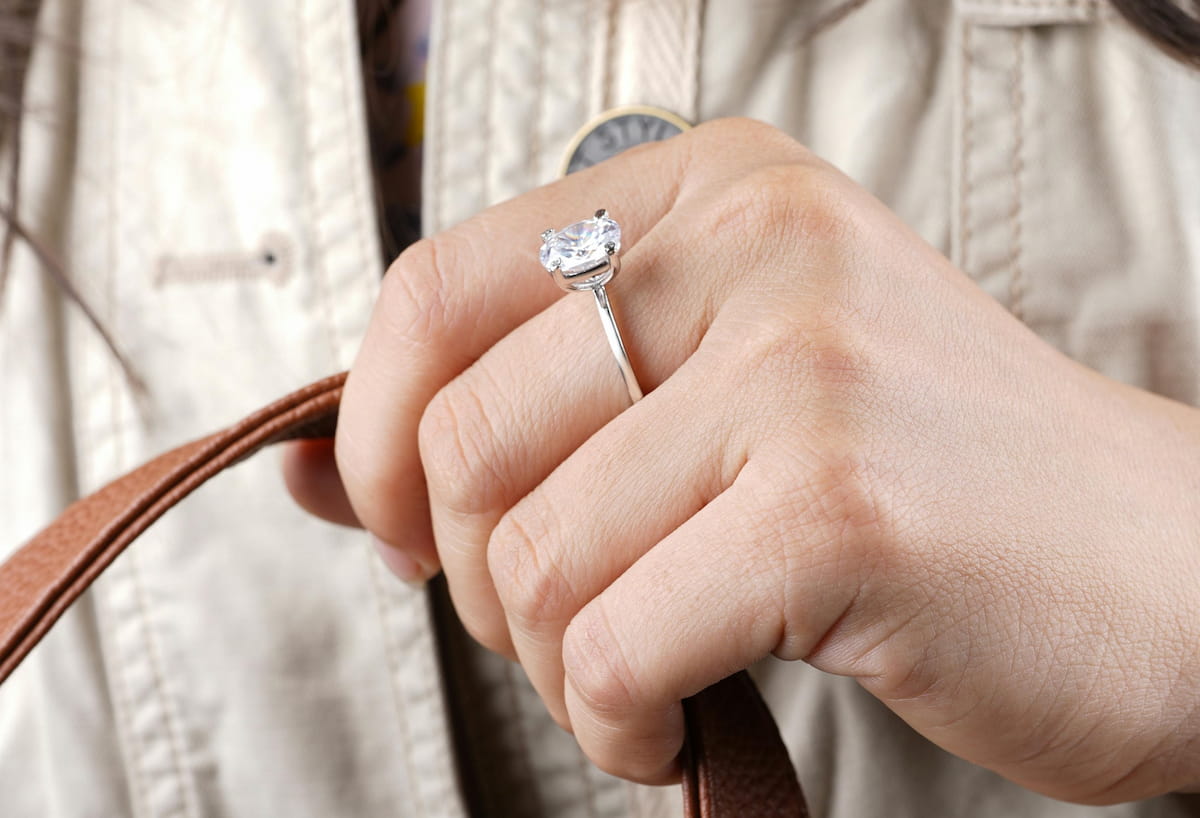
With a low-set ring, the stone will sit closer to the band, sometimes almost level with the metal. This style is perfect for those who prefer a secure and understated ring that fits seamlessly into their daily life. Now, let's look at the pros and cons:
Pros
Cons
How to Choose Between a High-Setting and Low-Setting Engagement Ring?
Choosing between a high vs low set engagement ring comes down to a few key factors: your lifestyle, personal style, and what's most important to you in a ring. Here are some simple questions and tips to help you decide which setting might be the best fit:
Think About Your Lifestyle and Daily Comfort
If you're someone who's active, works with your hands a lot, or doesn't want to worry about bumping or snagging your ring, a low-setting ring might be the better choice. The lower profile keeps the stone close to the band, making it more secure and less likely to get in the way.
On the other hand, if you want a ring that really stands out and don't mind being a bit more careful with it, a high-setting ring can offer that extra sparkle and visibility.
Consider Your Style and Aesthetic Preferences
Do you love a bold, eye-catching look? High settings tend to showcase the center stone beautifully, making it the main focus. They're perfect if you want a ring that sparkles from every angle.
If you prefer a more subtle, classic style that's easy to wear, a low setting might be more your fit. Low settings create a sleek, minimalist look that's elegant without being too flashy.
Think About Maintenance and Care
Maintenance is another important factor to consider when choosing between high set vs low set engagement ring. Low settings, with their closer-to-the-band design, tend to stay cleaner longer and are easier to maintain overall.
High settings, however, can require a bit more maintenance. Because the stone is elevated, it's more exposed to dirt and might need more frequent cleaning to keep it sparkling.
Consider Wedding Band Pairing
Think about how your engagement ring will look with a wedding band. High-setting rings can often sit well with straight bands, while some low-setting rings might require a contoured band to fit flush. If you want a seamless set, this is worth keeping in mind.
Conclusion
To wrap it up, choosing between a high vs low setting engagement ring is all about what fits best with your personal style and how you live day-to-day. If you want something eye-catching and glamorous, a high-set ring might be the way to go. But if you prioritize comfort, durability, and practicality, a low-set ring might suit you better. Ultimately, there's no right or wrong choice—it's about what feels right for you. Whatever you decide, the perfect ring will be the one that symbolizes your unique love story, so take your time and enjoy the process.