To do a diamond cut comparison, start by understanding the 4 Cs: Cut, Color, Clarity, and Carat weight. Focus on the Cut, as it significantly impacts the diamond's brilliance and overall appearance.
Check the diamond's cut grade, typically ranging from Excellent to Poor. This grade reflects how well the diamond has been shaped, proportioned, and polished. Look at key factors like symmetry, depth, and table size.
Also, compare the diamond's proportions, such as the crown angle and pavilion depth, as these affect light reflection. Utilize tools like online diamond calculators or comparison charts to view side-by-side differences in cut quality and overall value.
Lastly, consider the certification reports from trusted gemological laboratories like GIA or AGS, which provide accurate cut grading details. A higher-grade cut will result in better brilliance and overall aesthetic appeal.
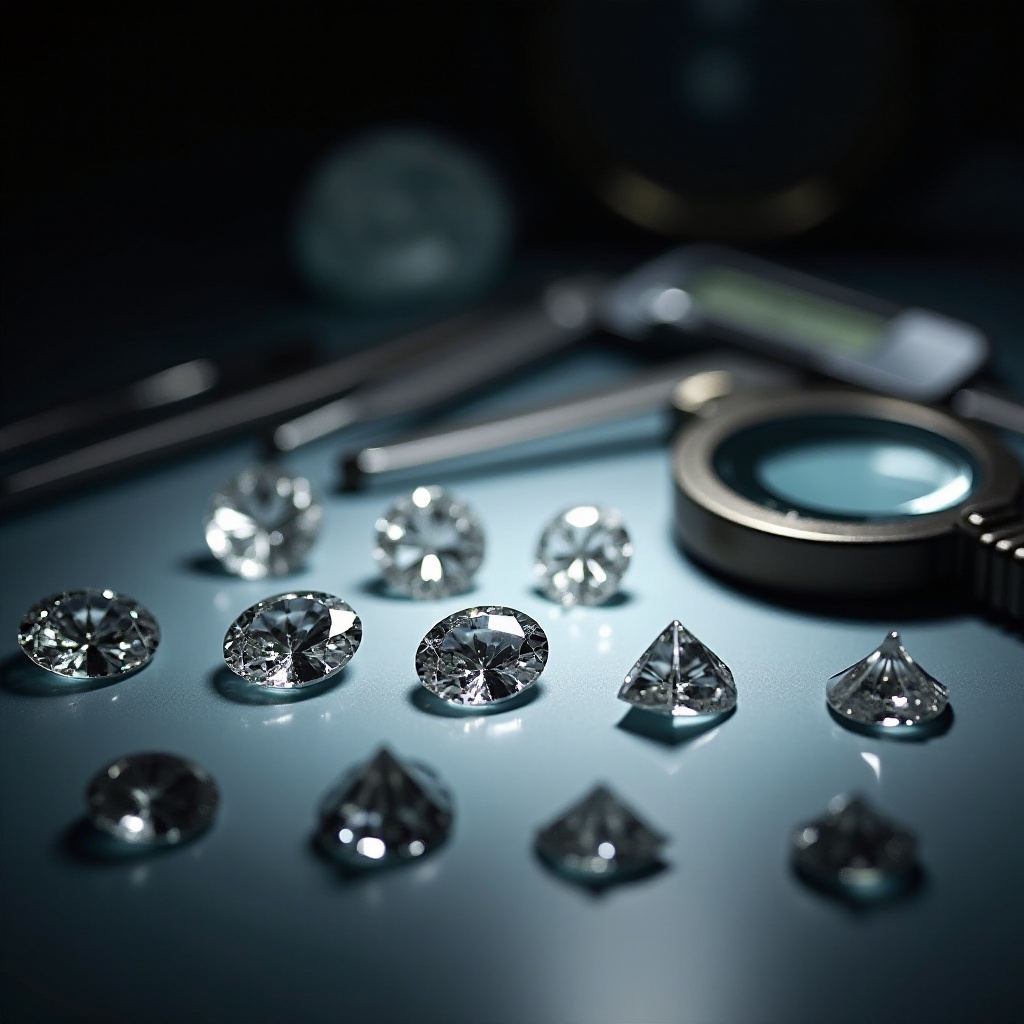
Do Round or Princess Cut Diamonds Look Bigger?
Round and princess cut diamonds can appear differently in size due to their shapes. Typically, a round cut diamond might appear slightly larger than a princess cut of the same carat weight, because its shape is more efficient at reflecting light.
The round cut has a symmetrical design, which allows for better light dispersion, often making it look more brilliant. However, the princess cut has sharp corners and tends to have a greater visual depth, which can make it look smaller from the top.
In terms of surface area, princess cuts usually appear smaller than round cuts for the same carat weight. However, they are often less expensive, giving the illusion of a larger stone for the price.
Ultimately, the perceived size depends on personal preferences and how the diamond is set in the jewelry. The round cut tends to maximize visual size and brilliance, while the princess cut offers a more angular look with more direct visual depth.
Cushion Cut Diamond Vs Princess Cut: Which Is Better?
Choosing between a cushion cut diamond and a princess cut depends on personal style, budget, and priorities. A cushion cut features rounded corners and large facets, offering a softer, vintage look with excellent brilliance and fire. It’s ideal if you prefer a romantic, classic aesthetic and want sparkle with a unique character.
Princess cut diamonds have sharp, square corners and a modern, geometric appeal. They typically appear larger face‑up for the same carat weight due to their square shape and offer excellent brightness. Princess cuts often cost less per carat than cushion cuts, making them a strong choice if size and value are priorities.
In summary, choose cushion for timeless elegance and fire, or princess for contemporary style, better face‑up size, and value. Both cuts are beautiful; the “better” option depends on your personal taste and budget.
Radiant Vs Emerald Cut Diamond: Which Is Better?
Radiant and emerald cut diamonds suit different style preferences and priorities. A radiant cut combines trimmed corners with brilliant facets, creating exceptional sparkle and fire. It hides inclusions well and often looks more lively and vibrant than other step cuts. Radiant cuts are a good choice if you want brilliance similar to round or cushion cuts but with a unique square or rectangular shape.
Emerald cut diamonds feature long, step‑cut facets and a large open table, producing a hall‑of‑mirrors effect rather than intense sparkle. They emphasize clarity and elegance, making inclusions more visible, so higher clarity grades are recommended. Emerald cuts appear sleek, sophisticated, and elongating on the finger.
Which is better depends on taste: choose radiant for maximum brilliance and a modern look, or emerald for understated elegance and clarity emphasis. From an SEO and buyer perspective, radiant appeals to sparkle‑seekers, while emerald attracts those seeking timeless, refined style.
Cushion Cut Diamond Vs Round: Which Is Better?
Choosing between a cushion cut and a round diamond depends on personal preference, style, and budget. The round cut is the most popular and offers optimal brilliance due to its symmetrical shape and precise light reflection. It's ideal for those who prioritize sparkle and a timeless look.
On the other hand, the cushion cut features rounded corners and larger facets, giving it a vintage charm and softer sparkle. It often has more depth, which can make it appear larger than a round diamond of the same carat weight.
If brilliance and tradition are top priorities, the round cut may be the better choice. However, if you're looking for something unique, with a touch of nostalgia and a larger perceived size, the cushion cut could be ideal. Ultimately, both cuts are beautiful, and the best option depends on your taste and budget.
Emerald Cut Diamond Vs Moissanite: Which Is Better?
Emerald cut diamonds and moissanite appeal to different priorities and budgets. An emerald cut diamond offers timeless elegance, step‑cut facets, and a hall‑of‑mirrors effect that highlights clarity. Diamonds retain value, have enduring prestige, and resist scratches due to their hardness (10 on the Mohs scale). However, emerald cuts show inclusions more easily, so higher clarity grades are recommended.
Moissanite, while visually similar, has different optical properties, producing more rainbow flashes and higher brilliance than many diamonds. It’s significantly more affordable than a diamond of similar size, making it appealing for budget‑conscious buyers seeking sparkle. Moissanite scores slightly lower on hardness (9.25), so it’s marginally less scratch‑resistant than diamond.
If value retention, traditional prestige, and long‑term durability matter most, emerald cut diamonds are better. If maximizing size and sparkle on a budget is the priority, moissanite can be the better choice.
Round Vs Princess Cut Diamond: Which Is Better?
The choice between a round and a princess cut diamond depends on personal preference, style, and priorities. Round cut diamonds are the most popular, offering exceptional brilliance due to their well-balanced symmetry and optimal light reflection. This makes them a timeless option, ideal for those who prioritize sparkle and traditional elegance.
On the other hand, princess cut diamonds have a modern, square shape with sharp corners, offering a more contemporary and geometric look. While princess cuts can appear larger face-up for the same carat weight, they tend to be more affordable than round cuts, making them an excellent choice for those seeking a bigger stone on a budget.
If maximum brilliance and a classic look are important, the round cut is often the better choice. However, if you prefer a bold, contemporary style and want more visual size for your money, the princess cut may be the better fit.
Radiant Cut Diamond Vs Princess Cut: Which Is Better?
Choosing between a radiant cut and a princess cut diamond depends on your aesthetic preferences. The radiant cut combines the brilliance of a round diamond with the shape of a square or rectangle, offering a vibrant sparkle and a unique look. It features trimmed corners and a faceted pattern that maximizes light reflection, making it an excellent choice for those seeking both brilliance and a modern design.
On the other hand, the princess cut is known for its sharp, clean lines and square shape. It has a more geometric appeal and is one of the most popular cuts after the round. Princess cuts tend to appear larger face-up for the same carat weight, offering more visible size.
If you value maximum sparkle and a distinctive, modern shape, the radiant cut is ideal. However, if you're drawn to clean lines and want a square shape that maximizes visible size, the princess cut may be the better choice. Ultimately, both cuts offer stunning beauty, and the “better” one depends on your style and budget.
Brilliant Cut Diamond Vs Round: What’s the Difference?
The term "brilliant cut" refers to the specific cutting style that maximizes a diamond's sparkle and brilliance. While a "round cut" is a specific type of brilliant cut, not all brilliant cuts are round. The round brilliant cut is the most common and popular, known for its precise 58 facets that enhance light reflection and create maximum brilliance.
Brilliant cut diamonds, in general, can come in various shapes, such as oval, cushion, or pear, but they share the same focus on maximizing sparkle. The round brilliant is a subset of brilliant cuts with a unique, symmetrical shape and optimal proportions for brilliance.
In summary, the round cut is a type of brilliant cut with a classic, symmetrical shape. "Brilliant cut" refers to any diamond shape designed to maximize light reflection, with the round cut being the most well-known version.
Baguette Diamond Vs Emerald Cut: What’s the Difference?
The main difference between baguette and emerald cut diamonds lies in their shape and the facet style. Baguette cut diamonds are rectangular with straight edges and step-cut facets, offering a sleek, elegant appearance. They have fewer facets, which gives them a more subtle sparkle compared to other cuts.
Emerald cut diamonds, also rectangular or square, have larger, parallel step facets that create a "hall of mirrors" effect. This cut emphasizes clarity and gives the stone a sophisticated, vintage appeal. Emerald cuts typically appear larger than baguette cuts because of their larger table surface area.
In summary, both cuts are known for their clean, linear look, but emerald cuts have more pronounced facets for greater light reflection, while baguette cuts are more subtle and typically used as side stones in jewelry. The choice depends on whether you prefer a more understated elegance (baguette) or a more striking, sophisticated appearance (emerald).
Old European Cut Diamond Vs Round Brilliant: What’s the Difference?
The Old European Cut (OEC) and the Round Brilliant Cut (RBC) are both popular diamond shapes, but they differ in their history, cut styles, and sparkle.
The Old European Cut, popular in the late 19th and early 20th centuries, has a round shape but features fewer, larger facets compared to modern cuts. This cut has a smaller table and a deeper pavilion, resulting in a more vintage look with a soft, romantic sparkle. The OEC tends to emphasize fire, which is the dispersion of light into color.
In contrast, the Round Brilliant Cut, the most popular cut today, features 58 facets, optimized for brilliance and sparkle. The RBC is designed to maximize light reflection, making it the most brilliant diamond cut. Its symmetrical proportions are intended to create maximum shine, with a modern, crisp appearance.
In summary, the OEC offers a vintage charm with a softer sparkle, while the RBC has a modern cut optimized for brilliance and shine. The choice depends on whether you prefer a classic or contemporary look.
Princess Cut Diamond Vs Square: What’s the Difference?
The terms "princess cut" and "square cut" are often used interchangeably, but they refer to different styles of diamonds. The princess cut is a specific diamond shape with sharp corners and a square or rectangular outline. It features brilliant cut facets, which maximize sparkle and brilliance.
On the other hand, "square cut" generally refers to any diamond that has a square shape, but it can be used to describe various cuts, including the radiant cut, which may not be as brilliant as a princess cut. Some square cuts have step-cut facets, which result in less sparkle compared to the brilliant-cut princess.
In summary, a princess cut is a specific type of square diamond that emphasizes brilliance, while "square cut" can refer to various cuts, not necessarily designed for maximum sparkle. The princess cut is typically the better choice if brilliance and a modern, sharp look are priorities.
Old European Cut Diamond Vs Old Mine Cut: What’s the Difference?
The Old European Cut (OEC) and Old Mine Cut (OMC) are both antique diamond cuts, but they differ in shape, faceting, and style.
The Old European Cut is round with a slightly smaller table and deeper pavilion than modern cuts. It has fewer, larger facets compared to contemporary cuts, emphasizing fire and a soft, romantic sparkle. The OEC was popular in the late 19th and early 20th centuries, giving it a vintage appeal.
The Old Mine Cut, also round, has a broader, squarer shape with a higher crown and smaller table. It typically features more uneven facets and a higher depth ratio, creating a different sparkle and a more distinct, old-world charm. The OMC was commonly cut by hand in the 18th and 19th centuries, giving it a more irregular, unique look compared to modern diamonds.
In summary, while both cuts offer vintage appeal, the OEC has a more refined, round shape with softer brilliance, while the OMC has a squarer, more irregular shape with a distinct, antique sparkle.
Old Mine Cut Diamond Vs Modern Cut: What’s the Difference?
The primary differences between Old Mine Cut diamonds and modern cuts lie in their shape, faceting, and overall appearance.
Old Mine Cut diamonds are antique cuts, typically round but with a slightly squarer shape and higher crown. They feature fewer, larger facets, giving them a unique, vintage sparkle. These diamonds were cut by hand, which results in slight irregularities, contributing to their distinct, old-world charm. The Old Mine Cut was popular in the 18th and 19th centuries.
Modern cut diamonds, such as the Round Brilliant Cut, are meticulously engineered with precise proportions and symmetry. They have more facets (typically 58), designed to maximize brilliance and light reflection. Modern cuts are optimized for the best sparkle and clarity, with advanced cutting technology ensuring uniformity and accuracy.
In summary, Old Mine Cut diamonds have a more antique, romantic look with less brilliance and more character, while modern cuts are designed for maximum brilliance and precision. The choice depends on whether you prefer vintage charm or contemporary sparkle.
Old Mine Cut Diamond Vs Round Brilliant: What’s the Difference?
The main differences between an Old Mine Cut diamond and a Round Brilliant Cut (RBC) lie in their shape, faceting, and overall sparkle.
Old Mine Cut diamonds are antique cuts that are round but have a slightly squarer shape with a higher crown and smaller table. These diamonds have fewer, larger facets, contributing to a vintage, romantic sparkle with more fire. They were manually cut by hand, resulting in unique, sometimes irregular shapes and characteristics.
In contrast, the Round Brilliant Cut is the most popular modern diamond cut, engineered to maximize brilliance with 58 facets. It has precise, symmetrical proportions that reflect light more efficiently, offering a brighter, more intense sparkle. The RBC is the product of advanced cutting technology, ensuring consistency and perfection.
In summary, while Old Mine Cuts offer a vintage, unique appeal with more fire, Round Brilliant Cuts prioritize modern brilliance and symmetry. The decision depends on whether you prefer the charm of an antique diamond or the maximized brilliance of a modern one.
Portuguese Cut Diamond Vs Round Brilliant: What’s the Difference?
The main difference between a Portuguese cut diamond and a Round Brilliant Cut (RBC) lies in their facet structure and overall appearance.
The Portuguese cut, a vintage style, features a unique and intricate arrangement of facets. Typically, it has a higher crown, a larger table, and multiple facets that give the diamond a fiery, sparkling effect. Its distinct faceting pattern makes it stand out as a more complex and antique design.
In contrast, the Round Brilliant Cut is designed for maximum brilliance with 58 facets that reflect light efficiently. The RBC's symmetrical proportions are optimized for intense sparkle, resulting in a more standardized yet brilliant appearance.
While the Portuguese cut offers a more unique, vintage sparkle with its intricate facets, the Round Brilliant Cut focuses on precision, consistency, and maximum brilliance. The choice between the two depends on whether you prefer a traditional, complex look or the modern brilliance of the RBC.
Round Vs Emerald Cut Diamond: Which Is Better?
The choice between a Round Cut and an Emerald Cut diamond depends on personal style and priorities.
The Round Cut is the most popular and offers maximum brilliance. It features 58 facets that reflect light efficiently, making it the most sparkling and visually dynamic option. It’s perfect for those who value traditional elegance and brilliance in their diamond.
On the other hand, the Emerald Cut is known for its sophisticated, elongated appearance. It has a rectangular shape with step-cut facets, which gives the diamond a “hall of mirrors” effect. The Emerald Cut emphasizes clarity, and its sleek, vintage look appeals to those who appreciate understated elegance over intense sparkle.
In summary, if you prioritize maximum sparkle and a timeless, classic look, the Round Cut may be the better choice. However, if you prefer a refined, elegant design with an emphasis on clarity, the Emerald Cut might be the right fit.
Cushion Cut Diamond Vs Emerald Cut: Which Is Better?
Choosing between a Cushion Cut and an Emerald Cut diamond depends on your personal preferences and priorities.
The Cushion Cut is known for its rounded corners and larger facets, offering a vintage and romantic appeal. It typically has more brilliance and fire due to its faceting style, making it a great choice for those who prioritize sparkle. The Cushion Cut is versatile, and its soft, elegant shape works well in both modern and vintage settings.
The Emerald Cut, on the other hand, has a sleek, rectangular shape with step-cut facets. It emphasizes clarity over sparkle, giving the diamond a sophisticated and elegant look. The Emerald Cut creates a unique "hall of mirrors" effect and is ideal for those who value subtlety, vintage charm, and clarity over intense brilliance.
In summary, if you prefer a diamond with more brilliance and a softer, romantic shape, the Cushion Cut is likely the better choice. If you prefer elegance, clarity, and a more understated style, the Emerald Cut may be the ideal option for you.