Moissanite and lab-grown diamonds are both popular alternatives to natural diamonds, but they differ in composition and characteristics. Moissanite is a silicon carbide gemstone, while lab diamonds are made of pure carbon, just like natural diamonds.
Moissanite is known for its exceptional brilliance and fire, often appearing more sparkly than diamonds. However, it has a lower hardness rating of 9.25 on the Mohs scale compared to diamonds' 10.
Lab diamonds have the same physical and chemical properties as natural diamonds, making them virtually indistinguishable from mined diamonds. They are more durable but tend to be more expensive than moissanite.
Moissanite is an affordable option that offers a similar appearance to diamonds but may not hold the same long-term value. Lab-grown diamonds, though cost-effective compared to natural diamonds, maintain better resale value and overall longevity.
Is Moissanite a Lab Grown Diamond?
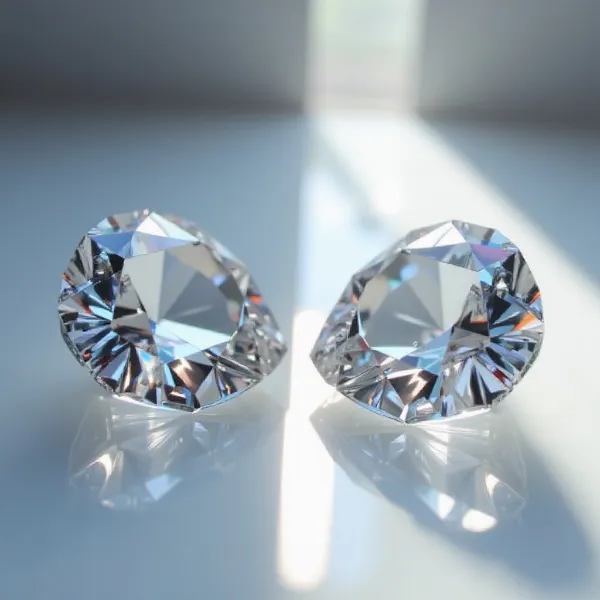
No, moissanite is not a lab-grown diamond. Moissanite is a separate gemstone made from silicon carbide, while lab-grown diamonds are made of pure carbon, the same as natural diamonds.
Though both are created in controlled environments, they have different chemical compositions and properties. Moissanite is known for its brilliance and fire, often appearing more sparkly than diamonds. Lab-grown diamonds, on the other hand, are identical to natural diamonds in terms of chemical structure, durability, and appearance.
Moissanite is a popular alternative due to its lower cost, while lab-grown diamonds provide a more authentic diamond experience at a reduced price compared to natural diamonds.
What Are Simulated Diamonds?
Simulated diamonds are gemstones that are designed to mimic the appearance of real diamonds but have a different chemical composition. Unlike natural or lab-grown diamonds, simulated diamonds are made from materials such as cubic zirconia (CZ), moissanite, or other synthetic stones.
These stones closely resemble diamonds in terms of sparkle and brilliance, but they are not made from carbon and do not have the same physical or chemical properties as real diamonds.
Simulated diamonds are often more affordable than natural or lab-grown diamonds, making them a popular choice for budget-conscious buyers. However, they may not hold the same long-term value or durability as genuine diamonds.
Are Simulated Diamonds Real Diamonds?
Simulated diamonds are not real diamonds. While they look similar, simulated diamonds are made from materials like cubic zirconia or moissanite, which are different from the carbon structure of natural diamonds.
Real diamonds are formed naturally under extreme pressure and heat over millions of years, or they can be grown in a lab under similar conditions. In contrast, simulated diamonds are created in a much shorter time frame using artificial methods.
Simulated diamonds can have similar brilliance and appearance to natural diamonds, but they do not share the same chemical, physical, or structural properties. As a result, simulated diamonds are less durable and may not hold the same value over time.
How Do Flawless Vs Diamond Simulants Differ?
Flawless diamonds and diamond simulants differ in both composition and characteristics. A flawless diamond is a genuine diamond that has no internal or external imperfections visible under 10x magnification. These diamonds are made of pure carbon and have exceptional durability and value.
Diamond simulants, such as cubic zirconia or moissanite, are synthetic materials designed to mimic the appearance of diamonds but are not composed of carbon. While they may look similar in brilliance, simulants lack the hardness, longevity, and intrinsic value of real diamonds.
Flawless diamonds have a higher price point due to their rarity and exceptional quality, whereas diamond simulants are much more affordable but may not withstand wear and tear as well. Additionally, simulants can show more brilliance or "fire" than real diamonds due to their different refractive index.
Is Moissanite a Real Diamond?
Moissanite is not a real diamond. While it is often compared to diamonds due to its similar appearance, moissanite is a separate gemstone made from silicon carbide.
Real diamonds are made of pure carbon and are formed under extreme pressure and heat over millions of years. Moissanite, on the other hand, is created in a lab or found naturally in small amounts in meteorites.
Although moissanite has similar brilliance and sparkle to diamonds, it is not as hard as a diamond. Moissanite scores 9.25 on the Mohs scale of hardness, while diamonds score a perfect 10.
While moissanite can be an attractive, more affordable alternative to diamonds, it is not considered a true diamond.
How to Tell a Diamond from a Moissanite?
To tell a diamond from moissanite, look for differences in sparkle, hardness, and inclusions.
Moissanite has more "fire" or rainbow-like flashes due to its higher refractive index, which can make it appear more colorful than a diamond. Diamonds typically sparkle with white light, while moissanite shows more colorful flashes.
In terms of hardness, diamonds score a 10 on the Mohs scale, while moissanite scores 9.25. This makes diamonds more durable and resistant to scratches.
Another way to distinguish them is by examining inclusions. Diamonds may have natural imperfections, while moissanite typically has fewer or no visible inclusions under magnification.
Professional gemologists can use tools like a refractive index measurement or UV light test to definitively distinguish between the two. A diamond will typically not fluoresce under UV light, while moissanite often does.
Is Moissanite Better Than Diamond?
Whether moissanite is better than a diamond depends on individual preferences and priorities.
Moissanite offers exceptional brilliance, often displaying more sparkle and colorful flashes than diamonds due to its higher refractive index. It is also more affordable than diamonds, making it an attractive choice for budget-conscious buyers.
However, diamonds are considered more durable, with a hardness of 10 on the Mohs scale compared to moissanite’s 9.25. Diamonds also have a higher long-term value and are often seen as a symbol of luxury and lasting investment.
In terms of appearance, moissanite might appeal to those who prefer a more colorful sparkle, while diamonds have a timeless, classic white brilliance. Ultimately, the choice between moissanite and diamond depends on factors such as budget, durability, and personal style preferences.
Which Are the Best Faux Diamond Engagement Rings?
Whether moissanite is better than a diamond depends on individual preferences and priorities.
Moissanite offers exceptional brilliance, often displaying more sparkle and colorful flashes than diamonds due to its higher refractive index. It is also more affordable than diamonds, making it an attractive choice for budget-conscious buyers.
However, diamonds are considered more durable, with a hardness of 10 on the Mohs scale compared to moissanite’s 9.25. Diamonds also have a higher long-term value and are often seen as a symbol of luxury and lasting investment.
In terms of appearance, moissanite might appeal to those who prefer a more colorful sparkle, while diamonds have a timeless, classic white brilliance. Ultimately, the choice between moissanite and diamond depends on factors such as budget, durability, and personal style preferences.
What Is Moissanite Diamond?
Whether moissanite is better than a diamond depends on individual preferences and priorities.
Moissanite offers exceptional brilliance, often displaying more sparkle and colorful flashes than diamonds due to its higher refractive index. It is also more affordable than diamonds, making it an attractive choice for budget-conscious buyers.
However, diamonds are considered more durable, with a hardness of 10 on the Mohs scale compared to moissanite’s 9.25. Diamonds also have a higher long-term value and are often seen as a symbol of luxury and lasting investment.
In terms of appearance, moissanite might appeal to those who prefer a more colorful sparkle, while diamonds have a timeless, classic white brilliance. Ultimately, the choice between moissanite and diamond depends on factors such as budget, durability, and personal style preferences.
What Is the Best Substitute for Diamond?
Whether moissanite is better than a diamond depends on individual preferences and priorities.
Moissanite offers exceptional brilliance, often displaying more sparkle and colorful flashes than diamonds due to its higher refractive index. It is also more affordable than diamonds, making it an attractive choice for budget-conscious buyers.
However, diamonds are considered more durable, with a hardness of 10 on the Mohs scale compared to moissanite’s 9.25. Diamonds also have a higher long-term value and are often seen as a symbol of luxury and lasting investment.
In terms of appearance, moissanite might appeal to those who prefer a more colorful sparkle, while diamonds have a timeless, classic white brilliance. Ultimately, the choice between moissanite and diamond depends on factors such as budget, durability, and personal style preferences.
What Is the Closest Stone to a Diamond?
The best substitute for a diamond depends on personal preferences, budget, and desired durability. Some of the top alternatives include:
- Moissanite: Known for its exceptional brilliance and sparkle, moissanite is a popular choice due to its affordability and durability. It closely resembles a diamond but is more budget-friendly.
- Cubic Zirconia (CZ): A highly affordable option that mimics the appearance of a diamond. Although it is less durable than moissanite, CZ provides a beautiful sparkle for those on a budget.
- White Sapphire: A more durable option than CZ, white sapphire offers a subtle, elegant sparkle. While it lacks the brilliance of a diamond or moissanite, it is a good option for those seeking a less flashy but durable stone.
- Lab-Grown Diamonds: These are real diamonds created in a lab and are chemically identical to natural diamonds. They are a sustainable and cost-effective option for those who prefer a real diamond but at a lower price.
Each of these alternatives has its unique qualities, so the best substitute depends on the balance between cost, appearance, and durability you prefer.
How Does Moissanite Sparkle Vs Diamond Look in Comparison?
Moissanite and diamonds both have remarkable sparkle, but their visual effects differ slightly due to their unique properties.
Moissanite has a higher refractive index (2.65-2.69) compared to diamonds (2.42), meaning it reflects light more intensely, resulting in a greater "fire" or rainbow-colored flashes. This can make moissanite appear more sparkly and colorful than a diamond, especially under bright lighting.
Diamonds, on the other hand, produce a more subdued sparkle that is primarily white and brilliant. While diamonds may not show as much colorful flash as moissanite, their sparkle is prized for its timeless and elegant brilliance.
In comparison, moissanite's sparkle is often more noticeable because of its vibrant flashes of color, while diamond sparkle is more subtle, with a focus on white light reflections. Both stones have excellent sparkle, but the choice between them depends on whether you prefer a more colorful or classic, white brilliance.
What Is the Best Faux Diamond?
The best faux diamond largely depends on your preferences for appearance, durability, and price. Some of the top choices include:
- Moissanite: Often regarded as the best faux diamond, moissanite has exceptional brilliance and fire, sometimes even exceeding that of a diamond. It’s durable (9.25 on the Mohs scale) and affordable, making it a top choice for many.
- Cubic Zirconia (CZ): The most affordable faux diamond, CZ mimics a diamond's look but lacks the same durability and sparkle. It’s a great budget option but can scratch and cloud over time.
- White Sapphire: More durable than CZ, white sapphires provide a subtle sparkle similar to diamonds. While not as brilliant, they’re a good alternative for those seeking a classic, less flashy stone.
For those looking for an alternative to diamonds with the best combination of sparkle and durability, moissanite is often the top recommendation.