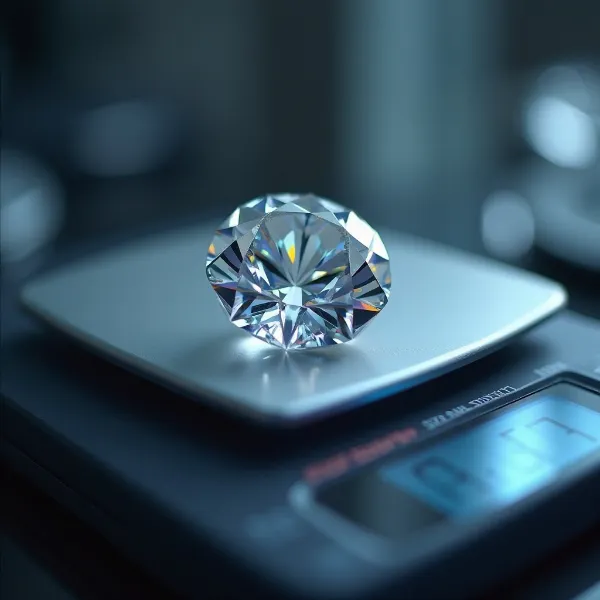
A diamond's weight is measured in carats (ct), with one carat equaling 200 milligrams (0.2 grams). Diamonds are typically weighed using a precise scale to determine their exact weight. Larger diamonds, often above 1 carat, are considered more valuable due to their rarity.
For instance, a 1-carat diamond is often considered a standard size for engagement rings, but diamonds can range from small fractions of a carat (like 0.25 ct) to several carats in weight (e.g., 5 ct and beyond).
What Is the Biggest Diamond in the World?
The largest diamond ever discovered is the Cullinan Diamond, which weighed an astounding 3,106 carats (1.37 pounds or 1.1 kilograms) before it was cut. It was found in South Africa in 1905 and is considered the largest gem-quality diamond ever.
The Cullinan was later cut into several stones, with the two most famous being the Great Star of Africa (530.2 carats) and the Lesser Star of Africa (317.4 carats). These stones are now part of the British Crown Jewels.
What Is a Tw Diamond?
A TW (Total Weight) diamond refers to the combined weight of all diamonds in a piece of jewelry. For instance, in a diamond ring with multiple stones, the TW indicates the sum of the individual diamond weights.
The term is commonly used in jewelry to help customers understand the total carat weight of the diamonds, especially in designs like multi-stone rings, earrings, or bracelets. It's important to note that TW doesn’t reflect the size of each individual diamond, but the cumulative weight.
What Is Karat in Diamond?
Karat (often abbreviated as "ct") is a unit of weight used to measure diamonds. One karat equals 200 milligrams or 0.2 grams. The higher the karat weight, the larger and more valuable the diamond.
However, karat weight alone does not determine a diamond's quality. Factors like cut, color, and clarity also play a significant role. Two diamonds of the same carat weight may differ greatly in value due to differences in their other characteristics.
How to Size a Diamond?
To size a diamond, jewelers primarily focus on its carat weight, which measures the diamond's size in terms of weight. However, the diamond's physical dimensions (length, width, and depth) are also critical factors in determining its appearance.
A proper measurement of a diamond is made using a caliper to measure its width, length, and depth. The jeweler will then evaluate these dimensions against industry standards for carat weight. The cut also affects how the diamond looks, even if the carat weight is the same.
For rings, sizing refers to finding the correct ring size for the wearer, ensuring it fits comfortably while accommodating the size and shape of the diamond or other gemstones set into the piece.
How to Tell the Size of a Diamond?
To determine the size of a diamond, jewelers primarily use carat weight, which is a direct measure of its weight. One carat equals 200 milligrams. A higher carat weight typically indicates a larger diamond, though other factors, like cut, also affect the diamond's appearance.
The physical dimensions of the diamond (length, width, and depth) also provide insights into its size. Jewelers often use precise tools like a caliper to measure these dimensions.
In addition, the shape of the diamond influences its perceived size. For example, an oval or marquise-shaped diamond can appear larger than a round diamond of the same carat weight due to its elongated shape.
What Is Ctw Diamond?
CTW stands for "Carat Total Weight" and refers to the combined weight of all diamonds in a piece of jewelry. For example, in a diamond bracelet or a multi-stone ring, the CTW indicates the sum of the carat weights of each individual diamond.
It's important to note that CTW reflects the total weight, not the size of each diamond. For instance, a ring with five 0.25-carat diamonds would have a CTW of 1.25 carats. CTW is commonly used in multi-stone designs to help customers understand the overall carat weight of the piece.
How Much Is a 5ct Diamond Worth?
The value of a 5-carat diamond depends on several factors, including its cut, color, clarity, and overall quality. On average, a 5-carat diamond can range anywhere from $25,000 to $500,000 or more.
For example, diamonds with higher clarity and color grades will cost more, while diamonds with inclusions or lower color grades will be priced lower. The cut quality also affects the diamond’s brilliance and, therefore, its value.
It's important to note that a larger carat weight does not always mean a proportionally higher price, as the quality of the diamond also plays a significant role in its worth.
Is Diamond Heavier Than Gold?
Yes, diamonds are denser than gold, meaning they are heavier by volume. However, gold is often measured by its mass in grams or ounces, while diamonds are weighed by carat (1 carat = 0.2 grams).
In terms of actual weight, a small piece of gold can weigh more than a similarly sized diamond, as gold is less dense. For example, a 1-carat diamond may weigh less than 1 gram, whereas 1 gram of gold is just 1 gram.
Despite diamonds being denser, gold's mass is often more noticeable in larger quantities, as it's commonly used in jewelry in bulkier pieces.
How Much Is 1 G of a Diamond?
The price of 1 gram of diamond depends on various factors like carat weight, cut, color, and clarity. Since 1 gram equals 5 carats, the cost for 1 gram of diamond can vary significantly.
On average, high-quality diamonds can range from $5,000 to $30,000 per carat, which means 1 gram (or 5 carats) could cost anywhere from $25,000 to $150,000. However, diamonds with lower quality or smaller sizes may be priced lower.
It’s important to note that the cost of diamonds increases exponentially with size and quality, so the value of 1 gram of diamonds is highly variable.