To determine if a diamond is real, start by checking its hardness. Real diamonds score a 10 on the Mohs scale, meaning they cannot be scratched by most other materials. You can also use the "fog test"; breathe on the diamond, and if it fogs up and clears quickly, it’s likely real, as diamonds don't retain heat well. Another method is the water test: drop the diamond into a glass of water. A real diamond will sink, while a fake one might float or sit on the surface.
Additionally, check for sharp edges. Real diamonds have sharp, defined edges, while fake diamonds tend to be more rounded. A professional appraisal or using a jeweler’s loupe to inspect inclusions can further confirm authenticity. Some diamonds are laser-etched with unique identification numbers, which can be verified for authenticity. Always consider professional verification if you're uncertain.
How Do You Know If You Have Real Diamonds?
To know if you have real diamonds, start by performing the "fog test." Breathe on the diamond; if it fogs up but clears quickly, it's likely real, as diamonds don't retain heat. Fake diamonds will fog up longer.
Another method is the "water test." Drop the diamond into a glass of water. Real diamonds are dense and will sink, while fake ones may float or sit on top. You can also check for sharp edges—real diamonds have sharp, defined edges, while fake ones are often rounded.
For a more professional approach, use a jeweler’s loupe to inspect the diamond for inclusions (natural imperfections). Real diamonds typically have tiny, unique inclusions, while fake ones often look flawless. Additionally, check for a laser-etched serial number, which some diamonds feature for identification purposes.
The most accurate way is to have your diamond professionally appraised or tested by a jeweler who can confirm its authenticity with advanced tools.
How to Tell If a Diamond Is Real at Home?
To tell if a diamond is real at home, start with the "fog test." Breathe on the diamond, and if it fogs up but clears quickly, it's likely real, as diamonds don’t retain heat. Fake diamonds fog up longer.
You can also perform the "water test." Fill a glass with water and drop the diamond in. Real diamonds are dense and will sink, while most fake diamonds will float or stay near the surface.
Another method is to check the diamond’s sharp edges. Real diamonds have sharp, defined edges, while fake diamonds tend to have rounded, softer edges.
Additionally, inspect the diamond under a magnifying glass or jeweler’s loupe for any inclusions, as real diamonds often have small imperfections. Fake diamonds tend to be flawless.
However, for full certainty, professional testing or an appraisal is recommended to confirm the authenticity of a diamond.
How Do I Know If the Diamonds Are Real?
To know if diamonds are real, start with simple tests. The "fog test" is a quick way to check—breathe on the diamond, and if it fogs up and clears quickly, it’s likely real, as diamonds do not hold moisture.
Another method is the "water test." Drop the diamond into a glass of water. Real diamonds will sink due to their density, while fake diamonds may float or stay at the top.
Check the diamond for sharp edges as well; real diamonds have sharp, well-defined edges, while fake diamonds tend to have rounded edges.
If possible, inspect the diamond under a magnifying glass. Real diamonds often have tiny imperfections or inclusions, while fake diamonds usually appear flawless.
For a more definitive answer, consider having the diamond professionally appraised. A jeweler can use specialized tools to confirm authenticity.
How to Tell a Real Diamond by Eye?
To tell a real diamond by eye, start by examining its brilliance. Real diamonds sparkle with a unique, sharp brilliance that reflects light in multiple colors. Fake diamonds often appear dull or have a less vibrant sparkle.
Check the edges of the diamond as well. Real diamonds have sharp, crisp edges, while synthetic stones or imitations like cubic zirconia have rounded or softened edges.
Another method is to inspect the diamond’s clarity. Real diamonds may have tiny inclusions or imperfections, which can be seen with magnification. Fake diamonds usually appear flawless to the naked eye.
You can also observe how the diamond interacts with light. A real diamond will show a mix of white and colored light, creating a stunning effect. Fake diamonds, on the other hand, may only reflect white light.
Lastly, check for a laser-inscribed serial number on the diamond’s girdle, a feature many real diamonds possess for identification.
What Does a Real Diamond Look Like?
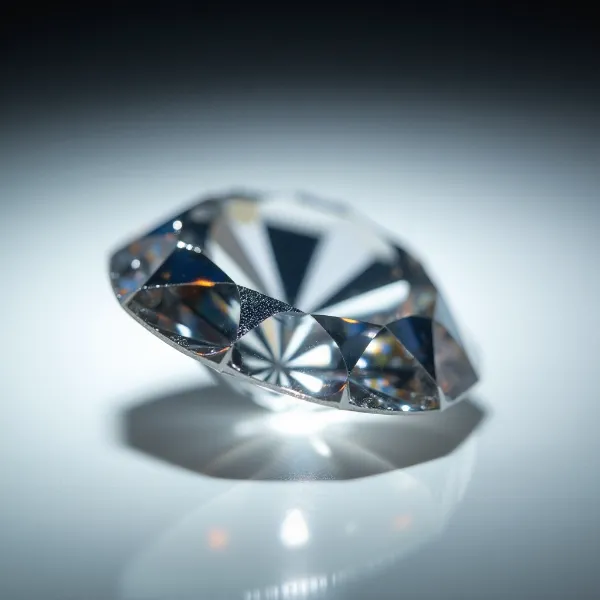
A real diamond typically displays exceptional brilliance, meaning it sparkles and reflects light in a vibrant and sharp way. It should show flashes of white light (called brilliance) and a spectrum of colors (called fire).
The surface of a real diamond is hard and smooth, with sharp, well-defined edges. Unlike imitations, real diamonds are clear and free from visible surface scratches. They also have a distinct "sparkle" or scintillation when moved, showing flashes of light in various directions.
A genuine diamond also has slight imperfections or inclusions, visible under magnification, as perfectly flawless diamonds are extremely rare. Real diamonds are typically cut in various shapes like round, princess, or cushion, and their facets are precisely aligned.
When held in light, a real diamond will show a balance of brilliance, fire, and scintillation. It does not appear dull or cloudy, which is often the case with imitation diamonds or lower-quality stones.
How to Spot a Fake Diamond?
To spot a fake diamond, start by examining its sparkle. Real diamonds reflect light in a unique way, showing brilliance, fire, and scintillation. Fake diamonds, like cubic zirconia, tend to have less sparkle and appear duller.
Check the edges of the diamond. Real diamonds have sharp, defined edges, while fake ones tend to have softer, rounded edges. You can also check for the diamond’s weight; real diamonds are denser and heavier than most imitations.
Perform the "fog test" by breathing on the diamond. If it fogs up but clears quickly, it's likely real, as diamonds don’t retain moisture. Fake diamonds tend to hold onto the fog for longer.
Look for inclusions or imperfections under a jeweler’s loupe. Real diamonds usually have small, natural imperfections, while fake diamonds appear flawless. Finally, inspect the diamond for any markings or serial numbers, as many real diamonds have laser engravings on their girdles for identification.
How to Test Diamonds?
To test diamonds, start with the "fog test." Breathe on the diamond, and if it fogs up but clears quickly, it’s likely real, as diamonds don’t retain moisture. Fake diamonds will hold the fog for a longer period.
Next, you can perform the "water test." Fill a glass with water and drop the diamond in. Real diamonds are dense and will sink, while fake diamonds tend to float or stay near the surface.
Another method is to check the diamond’s edges. Real diamonds have sharp, defined edges, while fake diamonds often have rounded or smooth edges.
You can also inspect the diamond under a jeweler’s loupe for inclusions. Real diamonds often have tiny imperfections or inclusions, while fake ones usually appear flawless.
If available, use a diamond tester, a device that measures a diamond's heat conductivity. For more accuracy, consider having the diamond professionally tested by a jeweler or appraiser who can confirm its authenticity with specialized tools.
How to Tell If a Diamond Ring Is Fake?
To tell if a diamond ring is fake, start by examining its sparkle. Real diamonds reflect light in a unique way, with brilliance and fire, showing flashes of white light and colored reflections. Fake diamonds tend to lack this vibrant sparkle.
Check the weight of the ring. Real diamonds are denser and heavier than most imitation stones, such as cubic zirconia. You can also check the edges of the diamond; real diamonds have sharp, defined edges, while fake diamonds tend to have rounded edges.
Perform the "fog test" by breathing on the diamond. If the fog clears quickly, it’s likely real, as diamonds do not retain moisture. Fake diamonds will hold onto the fog for longer.
Examine the ring for inclusions under a jeweler’s loupe. Real diamonds often have tiny imperfections, while fake diamonds appear flawless. Also, check for laser engravings or serial numbers on the girdle, as many real diamonds have unique identification markings.
Finally, if you're uncertain, take the ring to a jeweler for professional testing with a diamond tester or other specialized equipment.
Do Fake Diamonds Sink in Water?
Fake diamonds typically do not sink in water as real diamonds do. Real diamonds are much denser than most imitation stones, such as cubic zirconia or glass, which tend to float or stay near the surface.
To perform the water test, drop the stone into a glass of water. If it sinks immediately, it is likely real. If it floats or lingers at the surface, it is more likely to be a fake diamond.
However, this test alone is not foolproof. Other factors, such as the specific material of the imitation, can affect the result. For a more accurate assessment, use additional methods like checking the sparkle, performing the fog test, or seeking professional verification.
Can You See Through a Real Diamond?
No, you cannot see through a real diamond. Diamonds are highly refractive, meaning they bend and reflect light in multiple directions, creating a brilliant sparkle. This is what gives diamonds their distinct, radiant appearance.
If you look through a real diamond, you won’t see clearly, as light is scattered within the stone. However, if you try to look through a fake diamond, such as cubic zirconia or glass, it may appear clearer because these materials lack the same level of light dispersion.
To test a diamond's authenticity, examine its brilliance, fire, and scintillation. Real diamonds refract light in a way that imitators cannot replicate, making them appear far more sparkling and multi-dimensional.
How to Identify Uncut Diamonds?
Uncut diamonds, also known as rough diamonds, can be identified by their natural, irregular shape. Unlike polished diamonds, uncut diamonds have a raw, often jagged appearance with no symmetrical facets. They may resemble a crystal or a chunk of stone.
These diamonds usually appear cloudy or opaque, lacking the brilliance and sparkle seen in polished stones. The color may vary, but they often appear dull or grayish, especially when compared to a cut diamond that reflects light.
Uncut diamonds have a smooth or slightly textured surface, and their edges are generally unrefined, unlike the sharp facets found in finished diamonds. Their weight also tends to be more substantial than that of a similarly sized cut diamond.
To confirm that a diamond is uncut, professional appraisal or testing may be required. A gemologist can use specialized tools like a loupe to inspect the stone and verify its authenticity and rough status.
Real Diamond Sparkle Vs Fake: Which Is Better?
Real diamonds generally have superior sparkle compared to fake diamonds due to their unique physical properties. The brilliance of a real diamond is created by its ability to reflect light, bending it through its facets. This results in a fiery sparkle with flashes of color and white light.
Fake diamonds, such as cubic zirconia, tend to have a less dynamic sparkle. They may shine brightly under direct light, but the sparkle lacks the depth and intensity of a real diamond. Fake diamonds often reflect more white light than colored light, making them appear less lively.
In terms of overall quality, real diamonds are better. They have a higher level of durability, hardness, and long-term value. Fake diamonds may mimic the sparkle but don't have the same lasting brilliance or appeal.
Thus, while both types sparkle, the quality and intensity of a real diamond's sparkle are unmatched.
Do Fake Diamonds Shine in the Dark?
Fake diamonds do not naturally shine in the dark like some gemstones or materials, such as certain types of synthetic gems. While they may appear to shine under direct light, their sparkle is typically less intense and doesn't carry over in low-light or dark environments.
Real diamonds, on the other hand, reflect light in such a way that their brilliance and scintillation are visible even in dimmer lighting. Fake diamonds, such as cubic zirconia, may still appear somewhat shiny under certain lighting but lack the same depth and vibrancy.
If you are looking for a gem that shines in the dark, you would need to find one that has specific luminescent properties, which fake diamonds generally do not possess.
How to Identify a Black Diamond?
Identifying a black diamond involves observing its unique color, structure, and surface characteristics. Black diamonds are opaque and possess a deep black or dark gray color, often with a slightly metallic sheen. Unlike traditional diamonds, black diamonds do not sparkle or reflect light in the same way, as they absorb light rather than refract it.
A true black diamond has a rough, pitted surface with natural inclusions. These inclusions, known as "crystals," are visible under magnification and give the diamond its characteristic appearance. On the other hand, treated diamonds or imitations may not display these inclusions.
To confirm authenticity, professional testing by a gemologist can help, as black diamonds have unique physical properties. A jeweler may use a loupe or other tools to inspect the stone's internal characteristics. Additionally, black diamonds are often heavier than their non-diamond counterparts due to their density.
How to Tell If Diamonds Are Real Without a Tester?
To tell if diamonds are real without a tester, start with the "fog test." Breathe on the diamond, and if it fogs up and clears quickly, it’s likely real. Fake diamonds will retain the fog for longer.
Another method is the "water test." Drop the diamond into a glass of water. Real diamonds are dense and will sink, while fake diamonds may float or stay near the surface.
Check the edges of the diamond as well. Real diamonds have sharp, defined edges, while fake diamonds often have rounded, softer edges.
You can also inspect the diamond for inclusions. Real diamonds typically have tiny imperfections, while fake diamonds may appear flawless. Additionally, examine the diamond’s brilliance. Real diamonds reflect light and show flashes of color, whereas fake diamonds tend to have a less vibrant sparkle.
Lastly, consider the weight. Real diamonds are heavier than most imitations. While these methods are helpful, a professional jeweler can provide the most accurate verification.
How to Buy a Diamond Ring Without Getting Duped?
To buy a diamond ring without getting duped, start by understanding the 4 Cs: Cut, Color, Clarity, and Carat weight. These factors determine a diamond's quality and value. Always ask for a certificate from a reputable gemological laboratory, such as GIA or AGS, which confirms the diamond's authenticity and grading.
It's important to buy from a trusted jeweler with a solid reputation, ideally with reviews and certifications. If buying online, ensure the retailer offers a return policy and has secure payment options.
Compare prices across different sources to ensure you're getting a fair deal. Be wary of deals that seem too good to be true, as they might be selling lower-quality diamonds or imitations.
Request detailed information about the diamond's origin and any treatments it may have undergone, as some diamonds may be enhanced or treated, affecting their value.
Lastly, if you’re unsure, consult a gemologist or expert to help assess the diamond and guide your purchase.