To determine if amethyst is real, start by examining its color and clarity. Genuine amethyst typically has a deep purple hue, often with lighter or darker zones. It should be clear or slightly cloudy, without obvious bubbles or inclusions.
Next, check the hardness using the Mohs scale. Real amethyst has a hardness of 7, meaning it should scratch glass but not be easily scratched by a knife.
Another test involves temperature: Amethyst feels cool to the touch, even in warm environments.
Finally, consider the price. Genuine amethyst can be affordable, but extremely cheap amethyst might indicate synthetic or treated stones. If in doubt, consult a professional jeweler for an accurate assessment.
What Does Fake Amethyst Look Like?
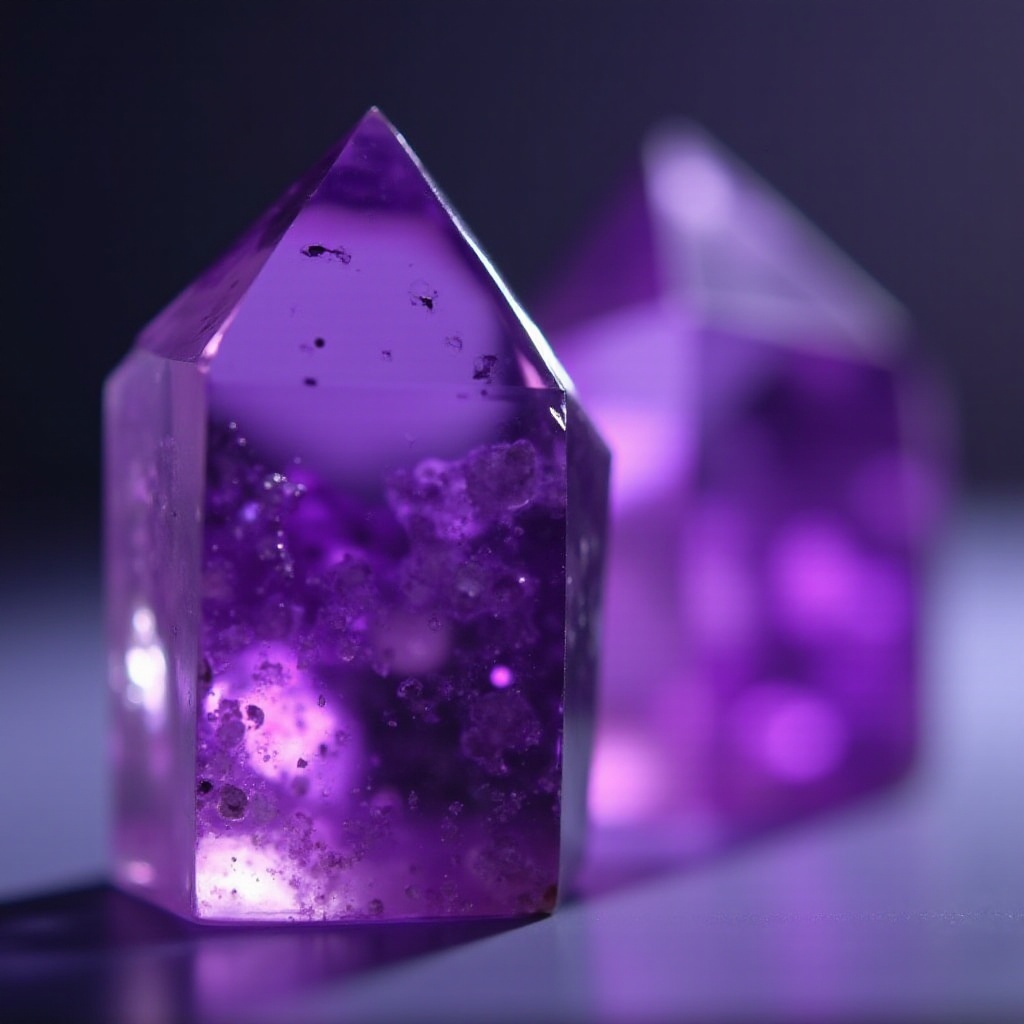
Fake amethyst often differs from genuine amethyst in several ways. It may have an unnaturally uniform color, lacking the natural variation found in real amethyst.
Fake amethyst is frequently lighter in color or overly dark, without the deep purple hues typical of genuine stones. Additionally, it might have visible bubbles or unnatural inclusions, which are not present in high-quality amethyst.
When examined closely, fake amethyst can sometimes look too flawless or overly glossy, as real amethyst has slight imperfections or inclusions.
Another giveaway is the feel: fake amethyst, often made from glass or synthetic materials, may feel lighter and warmer than genuine amethyst, which tends to feel cooler to the touch.
How Does Purple Sapphire Vs Amethyst Compare?
Purple sapphires and amethysts share a similar color range, but they differ significantly in composition and properties. Purple sapphires are a variety of corundum, known for their durability and hardness, scoring 9 on the Mohs scale, making them more scratch-resistant than amethyst.
Amethyst, a variety of quartz, has a hardness of 7 on the Mohs scale, which is softer than sapphire. While both stones can display shades of purple, purple sapphires tend to have a more intense, vivid hue, while amethyst can show lighter, more translucent purple tones.
Additionally, purple sapphires are typically more expensive than amethyst due to their rarity and durability. Amethyst, being more abundant, is usually more affordable. Sapphires are also less likely to have visible inclusions, whereas amethysts may contain more internal flaws.
What Is the Difference Between Purple Fluorite Vs Amethyst?
Purple fluorite and amethyst are both beautiful gemstones but differ in composition, hardness, and appearance.
Purple fluorite is a mineral made of calcium fluoride, and it has a Mohs hardness of 4, making it significantly softer and more prone to scratching compared to amethyst, which is a variety of quartz with a Mohs hardness of 7.
In terms of appearance, purple fluorite tends to have a vibrant, translucent, and sometimes more blueish purple color, while amethyst typically displays a deeper, rich purple hue. Fluorite may also exhibit more pronounced clarity and less internal inclusions than amethyst.
Fluorite is generally more affordable and is less commonly used in fine jewelry compared to amethyst. Both stones have metaphysical properties, but amethyst is more widely associated with spiritual growth and calmness, while fluorite is often linked to clarity and focus.
Why Does My Amethyst Have Black Spots?
Purple fluorite and amethyst are both beautiful gemstones but differ in composition, hardness, and appearance.
Purple fluorite is a mineral made of calcium fluoride, and it has a Mohs hardness of 4, making it significantly softer and more prone to scratching compared to amethyst, which is a variety of quartz with a Mohs hardness of 7.
In terms of appearance, purple fluorite tends to have a vibrant, translucent, and sometimes more blueish purple color, while amethyst typically displays a deeper, rich purple hue. Fluorite may also exhibit more pronounced clarity and less internal inclusions than amethyst.
Fluorite is generally more affordable and is less commonly used in fine jewelry compared to amethyst. Both stones have metaphysical properties, but amethyst is more widely associated with spiritual growth and calmness, while fluorite is often linked to clarity and focus.
What Makes Amethyst Purple?
Black spots in amethyst are often caused by inclusions of minerals or other materials trapped inside the stone during its formation. These inclusions can be other minerals such as hematite or other forms of iron.
In some cases, the black spots may also be a result of natural fractures or impurities in the crystal. While these inclusions don’t necessarily affect the amethyst’s quality, they can impact its overall appearance.
Additionally, if the amethyst has been treated or heated to enhance its color, the black spots could be a result of uneven heating or other external factors. It's always a good idea to consult with a professional jeweler to determine the exact cause if you're concerned.
Do Amethysts Fade?
Black spots in amethyst are often caused by inclusions of minerals or other materials trapped inside the stone during its formation. These inclusions can be other minerals such as hematite or other forms of iron.
In some cases, the black spots may also be a result of natural fractures or impurities in the crystal. While these inclusions don’t necessarily affect the amethyst’s quality, they can impact its overall appearance.
Additionally, if the amethyst has been treated or heated to enhance its color, the black spots could be a result of uneven heating or other external factors. It's always a good idea to consult with a professional jeweler to determine the exact cause if you're concerned.
How Does Purple Quartz Vs Amethyst Differ?
Amethysts can fade over time, especially when exposed to prolonged sunlight or intense heat. The purple color of amethyst is caused by the presence of iron within its crystal structure. When exposed to UV light or high temperatures, the iron can alter, causing the color to lighten or fade.
To prevent fading, it is best to store amethyst jewelry away from direct sunlight and extreme heat. Keeping amethyst in a cool, dark place can help maintain its vibrant purple color.
Although amethyst is fairly stable under normal conditions, long-term exposure to harsh environmental factors can result in noticeable color changes.
What Is the Difference Between Purple Agate Vs Amethyst?
Purple agate and amethyst are both popular gemstones but differ in composition, appearance, and properties.
Amethyst is a variety of quartz, composed primarily of silicon dioxide. It is known for its vibrant purple color, which can range from light lavender to deep violet. Amethyst has a Mohs hardness of 7, making it durable and suitable for jewelry.
Purple agate, on the other hand, is a variety of chalcedony, another form of quartz. Its color can range from pale lavender to deep purple, often with banded patterns. Agate is typically less translucent than amethyst and has a more muted, opaque appearance. It is also slightly softer, with a Mohs hardness of 6.5-7.
The key difference is that amethyst is usually clearer and more transparent, while purple agate tends to have a more opaque, banded structure. Additionally, amethyst is rarer and typically more expensive than purple agate.
How Can You Identify a Purple Crystal Not Amethyst?
To identify a purple crystal that is not amethyst, start by examining its color and clarity. While amethyst is known for its deep purple hues, other purple crystals like fluorite, charoite, or purple sapphire have distinct characteristics.
Fluorite tends to have a more translucent appearance, with a bright, almost glass-like surface, and often shows color zoning. Charoite, on the other hand, has unique swirling patterns and a distinctive violet to lavender color. Purple sapphires, although rare, are much harder than amethyst, with a Mohs hardness of 9 compared to amethyst's 7.
You can also test the hardness of the crystal. Amethyst is moderately hard, while some purple crystals like fluorite are softer and will scratch more easily.
Lastly, observe any inclusions or banding patterns; these can help differentiate crystals. Fluorite often exhibits a more uniform color with occasional inclusions, while amethyst may have visible impurities or natural color variations.
How Does Rose Quartz Vs Amethyst Compare in Energy?
Rose quartz and amethyst are both popular crystals known for their healing properties, but they differ in the type of energy they are believed to promote.
Rose quartz is often associated with love, compassion, and emotional healing. It is considered the "stone of love" and is thought to encourage self-love, harmony in relationships, and emotional healing. The energy of rose quartz is gentle, nurturing, and calming.
Amethyst, on the other hand, is linked to spiritual growth, tranquility, and mental clarity. It is believed to help with stress relief, promote balance, and enhance spiritual awareness. The energy of amethyst is considered more protective, helping to clear negative energy and bring peace of mind.
While both stones have calming effects, rose quartz focuses on emotional well-being and love, while amethyst is thought to offer higher spiritual benefits and clarity of thought.
Why Did Amethyst Turn Into Rose?
Amethyst turning into rose quartz is not a natural transformation of the same stone but rather a misunderstanding or a misidentification of different minerals. Amethyst is a variety of quartz that is purple due to iron impurities. Rose quartz, on the other hand, is also a form of quartz but gains its pink hue from trace elements such as titanium, iron, or manganese.
In some cases, heat treatment of amethyst can cause the color to fade or change, leading to a lighter, paler color that could resemble rose quartz. However, this is not a true transformation; it's more of a color alteration.
Amethyst and rose quartz are separate minerals, and while they are both varieties of quartz, their colors and properties are distinct, with amethyst maintaining its purple hues, and rose quartz being pink or rose-colored.
What Is the Difference Between Purple Diamond Vs Amethyst?
Purple diamonds and amethysts are both beautiful purple-colored stones but differ significantly in composition, rarity, and value.
Purple diamonds are a type of natural diamond, composed of carbon atoms arranged in a crystal lattice. Their purple color is caused by the presence of trace elements, like hydrogen or boron, or the result of lattice defects. Purple diamonds are extremely rare, with prices that can be significantly higher than other colored diamonds or gemstones, due to their rarity and high demand.
Amethyst, on the other hand, is a variety of quartz composed primarily of silicon dioxide. It is relatively abundant and affordable compared to purple diamonds. Amethyst’s purple color comes from the presence of iron and is typically lighter and more transparent than the deep, intense hues found in purple diamonds.
While both stones have captivating purple hues, purple diamonds are rarer, harder (with a Mohs hardness of 10), and more expensive, while amethysts are softer (Mohs hardness of 7) and more accessible.
What Is So Special About Amethyst?
Amethyst is special for its striking purple color, which ranges from light lavender to deep violet. It is a variety of quartz and is considered one of the most popular gemstones due to its beauty, accessibility, and symbolism.
Amethyst has long been associated with various metaphysical properties, such as promoting peace, spiritual growth, and emotional balance. It is believed to help with stress relief and enhance clarity of thought.
In addition to its spiritual significance, amethyst is durable, with a Mohs hardness of 7, making it suitable for a variety of jewelry. Its affordability compared to other gemstones with similar hues also adds to its popularity.
Amethyst is also a birthstone for February, and its rich history and cultural significance make it a timeless and cherished gem.