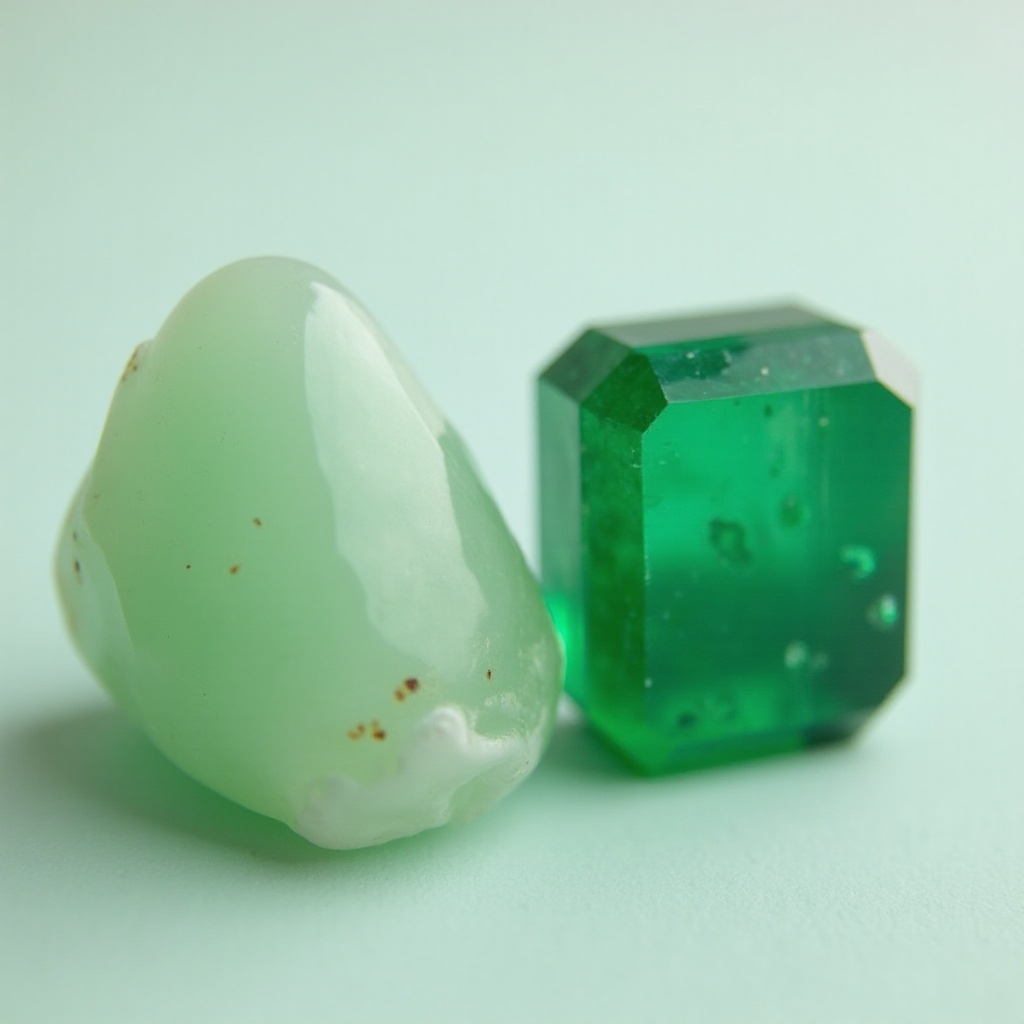
Jade and emerald are different stones, both in terms of composition and appearance.
Jade refers to two distinct minerals: nephrite and jadeite. Nephrite is softer and more common, while jadeite is rarer and more valuable. Jade is typically green, but can also appear in other colors like lavender, yellow, and white.
Emerald, on the other hand, is a variety of the mineral beryl, known for its rich green color due to traces of chromium and vanadium. It is harder than jade, ranking 7.5–8 on the Mohs scale compared to jade's 6–7.
The key differences lie in their chemical composition, hardness, and color variations. While both are prized gemstones, emeralds are generally considered more valuable due to their rarity and vibrant green hues.
Are Emeralds More Expensive Than Diamonds?
Emeralds can be more expensive than diamonds in certain cases, but this depends on various factors like quality, size, and rarity.
High-quality emeralds, especially those with intense color and minimal inclusions, can surpass diamonds in price per carat. However, diamonds generally tend to have a more consistent price range due to their wide availability and global demand.
Emeralds are rarer than diamonds, and their value is influenced by the vibrancy of the color, with the finest emeralds coming from places like Colombia. In contrast, diamonds are priced primarily based on the 4 Cs: cut, color, clarity, and carat weight.
While diamonds remain more common and widely recognized, high-quality emeralds, particularly larger stones or those with minimal flaws, can command higher prices than average diamonds.
Are Emeralds Cheaper Than Diamonds?
Emeralds are often cheaper than diamonds, but this isn’t always the case. Pricing depends on quality, size, clarity, color, and market demand rather than gemstone type alone.
High-quality emeralds with deep green color and good clarity can be very expensive, sometimes rivaling premium diamonds. However, most commercial emeralds are more affordable per carat than diamonds of similar size and quality.
Diamonds generally have a more standardized pricing structure driven by the 4 Cs (cut, color, clarity, carat), brand demand, and resale value. Emerald pricing varies more with color intensity and treatment levels.
In summary, many emeralds are cheaper than diamonds, but top-tier emeralds can match or exceed diamond prices depending on gemstone characteristics.
How Does Diamond Vs Emerald Compare?
Diamonds and emeralds differ in several key aspects, including composition, appearance, and pricing.
Diamonds are made of carbon and are the hardest known natural material, ranking 10 on the Mohs scale. They are valued primarily based on the 4 Cs: cut, color, clarity, and carat weight. Their clarity is often a crucial factor in pricing, with higher-quality diamonds being rarer and more expensive.
Emeralds, on the other hand, are a variety of the mineral beryl and are typically green due to traces of chromium or vanadium. They are softer than diamonds, with a Mohs hardness of 7.5 to 8, making them more susceptible to scratching. Emeralds are valued for their vibrant color and are often judged based on their hue, transparency, and lack of inclusions, though inclusions in emeralds are more accepted than in diamonds.
In terms of pricing, diamonds tend to be more expensive on average due to their rarity and consistent demand. However, top-quality emeralds with intense color and minimal inclusions can command prices higher than diamonds.
What Is the Difference Between Green Beryl Vs Emerald?
Green beryl and emerald are both varieties of the mineral beryl but differ in terms of color, value, and sometimes clarity.
Emeralds are specifically green beryls that contain trace elements of chromium or vanadium, which give them their vivid green color. They are typically more valuable due to their rich color and rarity. Emeralds are often found with inclusions, which are accepted as part of their character, but their clarity and vibrant green hue are key factors in pricing.
Green beryl, on the other hand, is a more generic term for beryl that appears green, but it doesn’t have the same level of color saturation as emerald. Green beryl lacks the chromium or vanadium content, making its color paler and less intense. As a result, green beryl is generally less expensive than emerald.
In short, while emerald is a specific, more valuable variety of green beryl with deeper color, green beryl is a broader category and often less valuable due to its lighter hue and lack of the distinctive trace elements that make emeralds so prized.
How Does Emerald Vs Green Sapphire Compare?
Emerald and green sapphire are both stunning gemstones, but they differ significantly in terms of composition, hardness, and value.
Emeralds are a variety of beryl, colored by trace elements of chromium or vanadium. They typically display vibrant green hues and have a Mohs hardness of 7.5 to 8. Emeralds often contain natural inclusions known as "jardin," which are accepted in the gemstone industry. While emeralds are rare and highly valued for their rich color, they are also more prone to damage due to their relative softness compared to sapphires.
Green sapphires, a variety of the mineral corundum, are harder, with a Mohs rating of 9. They are less likely to have inclusions and are generally more durable and resistant to scratching than emeralds. Green sapphires often have a more subdued color compared to emeralds, ranging from olive to forest green, depending on the trace elements present.
In terms of value, emeralds can be more expensive, especially for high-quality stones with intense color. Green sapphires are typically more affordable, but high-quality green sapphires with vivid color can still command premium prices.
What Is the Difference Between Green Diamond Vs Emerald?
Green diamonds and emeralds are both rare and valuable gemstones but differ in composition, appearance, and pricing.
Green diamonds are a type of diamond that gets their green color from natural radiation. They are a variety of diamond and share the same chemical composition, made of pure carbon. Green diamonds are prized for their rarity, as they occur less frequently than other colored diamonds. The color in green diamonds can range from a faint green to a vivid, intense green, with pricing largely influenced by color saturation and diamond quality.
Emeralds, on the other hand, are a variety of beryl, colored green by trace elements of chromium or vanadium. They have a softer hardness, rated 7.5 to 8 on the Mohs scale, which makes them more prone to scratches and inclusions compared to diamonds. Emeralds are valued based on color, clarity, and size, with a deep, vivid green hue being the most desirable.
While emeralds tend to be more affordable than green diamonds on average, high-quality green diamonds can command very high prices due to their rarity and unique color.
How Does Green Onyx Vs Emerald Differ?
Green onyx and emerald differ in several key areas, including composition, appearance, and value.
Green onyx is a type of chalcedony, which is a form of quartz. It is characterized by its smooth, opaque texture and bright green color. Onyx is relatively affordable and is commonly used in jewelry, particularly for its sleek, polished look. It has a Mohs hardness of around 6.5 to 7, making it suitable for various jewelry settings, though it is more prone to scratching than harder gemstones.
Emerald, on the other hand, is a variety of beryl and is known for its vibrant green color, which is caused by traces of chromium or vanadium. Emeralds are generally more valuable than green onyx due to their rarity and stunning appearance. They have a Mohs hardness of 7.5 to 8 but are often found with inclusions, known as "jardin," that are accepted as part of their natural beauty.
While both gemstones share a green hue, emeralds are rarer, more durable, and typically more expensive than green onyx. Green onyx offers a more affordable alternative with a distinct, polished look.
What Is the Difference Between Tourmaline Vs Emerald?
Tourmaline and emerald are both beautiful gemstones, but they differ in composition, color, and value.
Tourmaline is a complex silicate mineral that comes in a wide range of colors, including green, pink, blue, and even bi-color varieties. Its versatility in color makes it highly popular in jewelry. Tourmaline ranks 7 to 7.5 on the Mohs scale, making it a durable but slightly softer option than emeralds.
Emerald, a variety of beryl, is known for its rich green hue, caused by traces of chromium or vanadium. Emeralds are more rare and are considered one of the most valuable gemstones due to their striking color and historical significance. Emeralds rank 7.5 to 8 on the Mohs scale, but they are often found with inclusions, which are generally accepted as part of their charm.
In terms of value, emeralds are typically more expensive than tourmaline, especially those with intense, vivid color and minimal inclusions. Tourmaline offers a wider variety of colors and is often more affordable, making it a popular choice for various jewelry designs.
Are Emeralds or Sapphires More Expensive?
Emeralds and sapphires can both be expensive, but generally, sapphires are more affordable on average than emeralds, especially when comparing stones of similar quality.
Sapphires, which are a variety of corundum, come in various colors, but blue sapphires are the most well-known. They are typically priced based on their color, clarity, and size. Sapphires are durable, ranking 9 on the Mohs scale, making them ideal for various jewelry types.
Emeralds, a variety of beryl, are often more expensive due to their rarity and the intensity of their green color, which is caused by chromium or vanadium. High-quality emeralds with vivid color and minimal inclusions can command higher prices than sapphires. Emeralds are also softer than sapphires, with a Mohs hardness of 7.5 to 8, making them more prone to damage.
In summary, while sapphires tend to be more affordable in general, high-quality emeralds with exceptional color and clarity can surpass sapphires in price.