When shopping for luxurious gemstones, especially engagement rings, the discussion often centers around two prominent options: moissanite vs diamond. While diamonds have long been celebrated for their brilliance and durability, moissanite has emerged as a compelling contender, prized for its unique qualities. In this guide, we delve into the essential characteristics of moissanite and diamond, exploring their origins, properties, and the key differences between them. Read on to make an informed choice for your needs.
What Is Moissanite?
Moissanite, a mineral comprising silicon carbide, holds a fascinating history rooted in celestial origins. Discovered in 1893 within a meteorite in Canyon Diablo, Arizona, by the esteemed chemist Henri Moissan, it initially confounded scientists who mistook it for diamonds. Not until 1904 did Moissan ascertain its true nature as silicon carbide, leading to the mineral's namesake in his honor.
While originally scarce, subsequent discoveries in the Earth's upper mantle near Wyoming in 1958, followed by findings in Russian rock formations, expanded its accessibility. Yet, modern moissanite primarily originates from laboratory cultivation, leveraging cutting-edge technology to replicate its natural formation. This method not only ensures traceability but also circumvents the environmental toll of traditional mining, aligning with sustainable practices.
Today, moissanite enjoys burgeoning popularity as a diamond alternative, particularly adorning engagement rings as a striking centerpiece. Its ethical sourcing and lower environmental impact underscore its appeal in an increasingly eco-conscious market.
What Is Diamond?
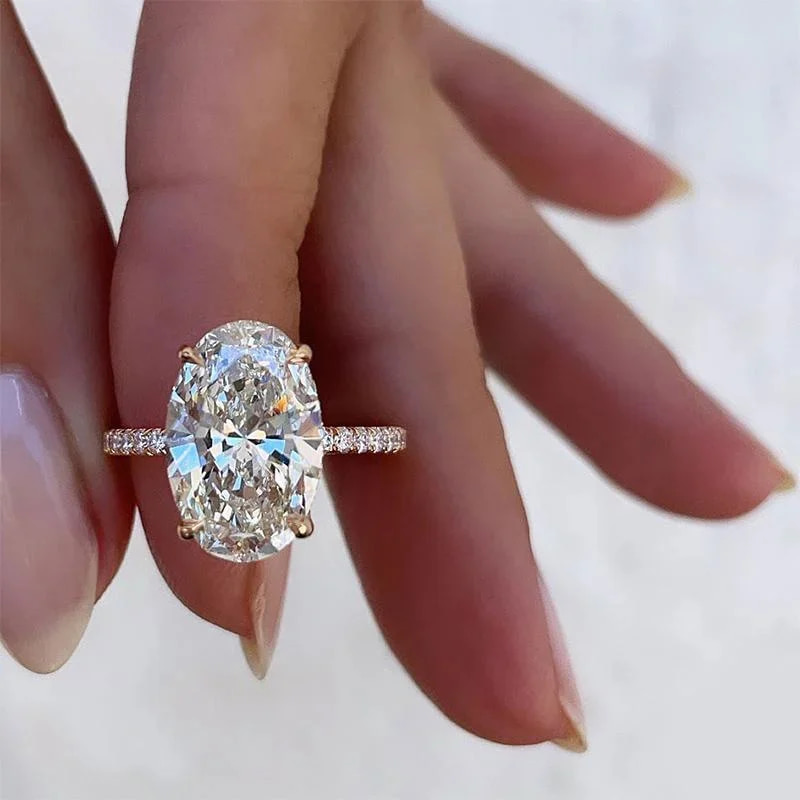
A diamond is a precious gemstone composed of carbon atoms arranged in a crystalline structure. Renowned for its exceptional hardness and brilliance, it holds enduring value in jewelry and industrial applications. Formed deep within the Earth's mantle, diamonds are typically mined from kimberlite rock formations or alluvial deposits.
According to the Cape Town Diamond Museum, diamonds were initially unearthed around 2500 BCE in India, though not through conventional mining methods; rather, they were gathered from sediment deposits in rivers and streams. These early diamonds, composed solely of carbon, represented a stark contrast to the more abundant graphite, despite their shared elemental composition.
Renowned for its unparalleled hardness, diamond stands as one of nature's toughest substances, capable of withstanding scratches only from another diamond. This exceptional durability extends its utility beyond ornamental purposes, finding practical application in various technological realms, such as cutting and drilling.
While some diamonds originated deep within the Earth's mantle, volcanic eruptions transported select diamond-bearing material to the surface, where it eventually found its way into riverbeds. However, contemporary diamond mining predominantly involves direct extraction from kimberlite, the diamond-rich rock, named after the South African mining town of Kimberley, where its significance was first recognized.
Moissanite vs Diamond: What Are the Differences?
When comparing diamond vs moissanite, there are several key differences to consider:
Origin and Composition
Diamonds are naturally occurring gemstones formed from carbon under high pressure and temperature deep within the Earth. Moissanite, on the other hand, is composed of silicon carbide and was first discovered in meteorites. Natural moissanite is incredibly rare, so almost all moissanite sold today is synthetically created in laboratories.
Brilliance and Fire
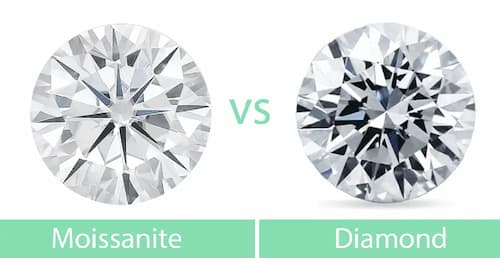
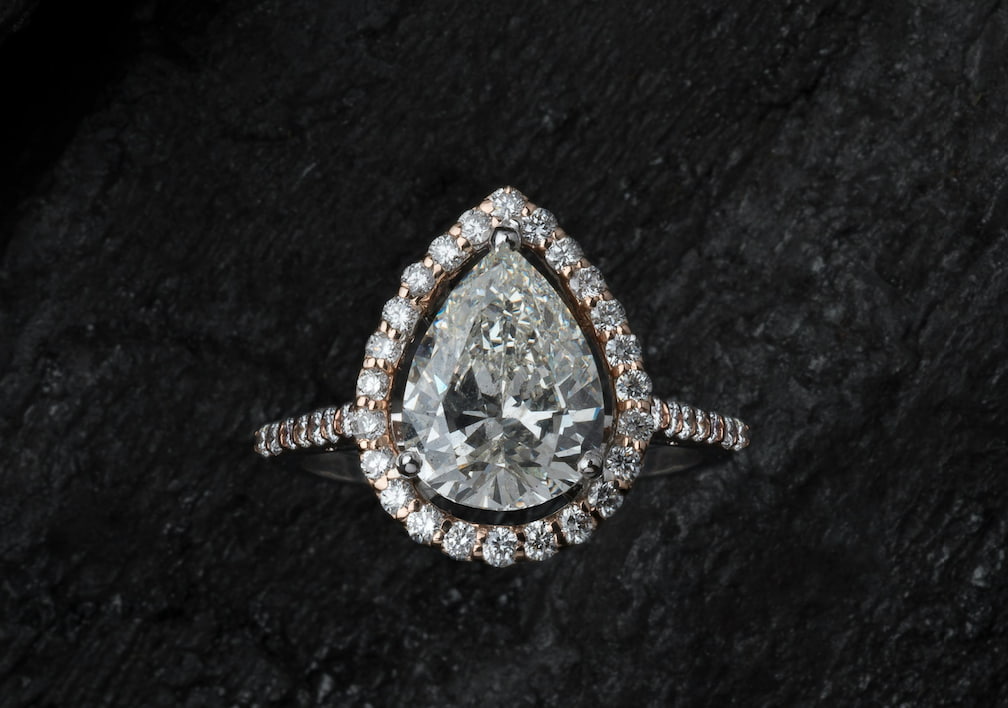
Both gemstones are known for their stunning brilliance, but they differ in the way they reflect light. Diamonds reflect light in a way that maximizes their white light return, known as brilliance. Moissanite displays a fiery, rainbow-colored light refraction, which can be more pronounced than that of a diamond. This quality, known as fire, is due to moissanite's higher dispersion rate compared to diamonds.
Hardness and Durability
Diamonds top the Mohs scale of mineral hardness at a solid 10, making them the hardest known mineral—ideal for everyday wear. Moissanite follows closely with a hardness rating of 9.25 to 9.5, making it also very suitable for daily wear but slightly less durable than diamonds.
Color and Clarity
Diamonds range widely in color and clarity, with colorless and flawless varieties being the most prized and valuable. Moissanite typically does not have natural flaws or inclusions and is usually created to be colorless or near-colorless. However, under certain lighting, moissanite may emit a slight yellow or greenish hue.
Price
When comparing moissanite vs diamond in price, the difference is the most significant. Moissanite is generally much more affordable than diamonds.
The price of diamonds can vary greatly depending on their carat, cut, color, and clarity — often summarized as the "4 Cs." A one-carat diamond of average quality can cost from $4,000 to $8,000. High-quality diamonds can soar well above $10,000, particularly if they excel in color and clarity or come from a prestigious brand.
Moissanite offers a budget-friendly alternative with many of the aesthetic benefits of diamonds without the same financial outlay. Generally, you can expect to pay anywhere from $300 to $600 for a one-carat moissanite gem. Larger or exceptionally clear moissanite stones can cost more, but even high-quality options rarely exceed $1,200 for a single stone.
Ethical and Environmental Considerations
Ethical sourcing and environmental impact are increasingly important to many buyers. Diamonds, unless specifically sourced from conflict-free zones, can sometimes carry ethical concerns related to mining practices. Synthetic moissanite offers a responsible choice with minimal environmental impact, as it is lab-grown.
Conclusion
In the debate of moissanite vs diamond, each gemstone boasts unique attributes, catering to diverse preferences and values. Moissanite, with its ethical sourcing, lower price point, and remarkable brilliance, stands as a compelling alternative to the traditional diamond. Conversely, diamonds, renowned for their unparalleled durability, timeless allure, and enduring value, remain a symbol of eternal love and prestige. Whether you prioritize sustainability, affordability, or classic elegance, both moissanite and diamond offer exceptional beauty that can last a lifetime.