Diamond cut grades refer to how well a diamond's facets are proportioned and shaped, influencing its brilliance and sparkle. The most common grading scale for cut quality is provided by the Gemological Institute of America (GIA), which assigns grades from Excellent, Very Good, Good, Fair, to Poor.
An "Excellent" cut diamond has optimal proportions, reflecting light to create maximum brilliance. "Very Good" diamonds are also well-proportioned but may not exhibit the same level of brilliance as "Excellent" stones. "Good" cuts offer acceptable brilliance, but with more noticeable differences in proportions. "Fair" and "Poor" cuts result in lower brilliance and light performance.
The cut grade is one of the most important factors in determining a diamond's overall appearance and value. It is distinct from a diamond's shape, such as round or square, as it focuses solely on the facet arrangement and proportions. A higher-quality cut increases a diamond's visual appeal, making it more desirable and valuable in the market.
Which Diamond Cut Sparkles the Most?
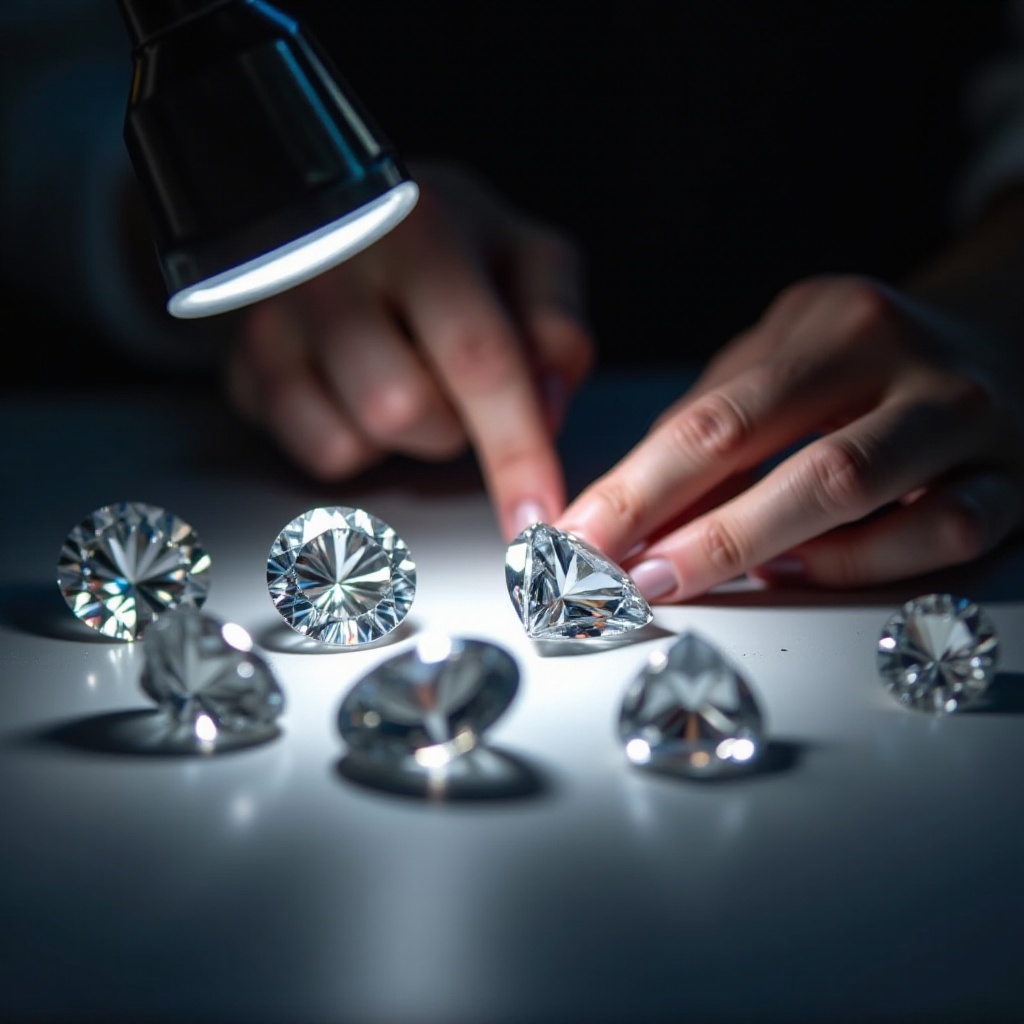
The round brilliant cut is widely regarded as the diamond cut that sparkles the most. This cut is specifically designed to maximize light reflection, with 58 facets that allow light to enter the diamond, bounce around, and exit, creating intense brilliance and sparkle.
Other cuts, such as the cushion or princess cut, can also exhibit significant sparkle, but the round brilliant cut consistently outperforms them in terms of brilliance due to its precise proportions and the way it interacts with light. The round brilliant cut is the most popular and sought-after choice for engagement rings because of its exceptional sparkle.
Ultimately, a diamond's sparkle is influenced by its cut quality, so even within the round brilliant category, diamonds with higher cut grades (such as Excellent or Very Good) will produce superior sparkle compared to those with lower grades.
Diamond Cut Ideal Vs Excellent: What’s the Difference?
The difference between "Ideal" and "Excellent" diamond cut grades lies in the precision of the cut.
"Ideal" refers to diamonds with near-perfect proportions and angles, designed to reflect light optimally. While it offers excellent brilliance, there may be slight room for improvement in proportions, though these differences are often imperceptible to the naked eye.
"Excellent" is the highest grade given by organizations like the GIA, indicating perfect or near-perfect proportions. These diamonds are cut to the most precise specifications, ensuring the best possible light performance and brilliance.
In essence, both cuts are of very high quality, but "Excellent" diamonds represent the pinnacle of cut quality, offering slightly superior brilliance compared to "Ideal" cut diamonds.
What Diamond Cut Looks Biggest?
The oval cut diamond tends to appear the largest relative to its carat weight. Its elongated shape creates the illusion of a larger size, making it appear bigger than round diamonds of the same weight.
Another cut that appears larger is the emerald cut, which has a rectangular shape with broad, flat planes. This cut maximizes the visual surface area, making it look bigger than its actual carat weight suggests.
The pear-shaped cut also creates a similar effect, as its tapered shape offers more surface area, giving the impression of a larger stone.
Ultimately, cuts like oval, emerald, and pear maximize visual size, but it’s essential to consider the overall proportions, as deeper cuts may reduce a diamond's face-up size despite higher carat weight.
Excellent Vs Very Good Cut Diamond: Which Is Better?
An "Excellent" cut diamond is considered better than a "Very Good" cut due to its superior proportions, symmetry, and light performance. Diamonds graded as "Excellent" exhibit the highest level of brilliance, reflecting the most light and creating a more vibrant sparkle.
"Very Good" cut diamonds also offer excellent brilliance but with slightly less optimal proportions than "Excellent" diamonds. The differences are subtle and often imperceptible to the naked eye, but they affect overall light reflection and sparkle.
In terms of value, an "Excellent" cut diamond typically commands a higher price due to its exceptional brilliance and quality. However, a "Very Good" cut diamond can still offer great sparkle and may provide better value for those seeking a balance between quality and cost.
Lab Cut Vs Natural Diamond: What’s the Difference?
The primary difference between a lab-cut and a natural diamond lies in their origin. A natural diamond forms over millions of years deep within the Earth under extreme pressure and temperature, while a lab-cut diamond is created in a laboratory setting through high-pressure, high-temperature (HPHT) or chemical vapor deposition (CVD) methods.
In terms of appearance and quality, lab-cut diamonds are virtually identical to natural diamonds. Both can be graded based on the 4Cs (cut, color, clarity, and carat weight). The key distinction is that lab-cut diamonds are generally less expensive than natural diamonds due to their synthetic nature and quicker production process.
Ethically, lab-cut diamonds are often preferred as they don't involve mining, which can have environmental and human rights concerns. Both types of diamonds are real diamonds, with lab-cut stones offering a more affordable and sustainable option without compromising on beauty or durability.
Diamond Cut Very Good Vs Ideal: Which Is Better?
An "Ideal" cut diamond is considered better than a "Very Good" cut diamond due to its superior proportions and light performance. Ideal cuts are crafted to maximize brilliance and sparkle, with precise angles that reflect light optimally. These diamonds are graded to the highest standards.
"Very Good" cut diamonds also offer excellent sparkle, but they may not be as perfectly proportioned as Ideal cuts. The difference is often subtle and hard to notice to the naked eye but can impact overall brilliance.
If maximum brilliance and the highest quality are the goals, an "Ideal" cut is the better choice. However, "Very Good" cut diamonds offer excellent value for those seeking quality at a slightly lower price point while still achieving great brilliance.
Which Diamond Cut Sparkles the Least?
The diamond cut that sparkles the least is typically the "Emerald" cut. This cut has fewer facets than other diamonds, resulting in less light reflection and brilliance. The long, rectangular shape with step cuts creates a more subtle shine.
Other cuts with lower sparkle potential include the "Asscher" and "Marquise" cuts. While still beautiful, these cuts tend to have a more subdued light reflection compared to cuts like the round brilliant, which is designed to maximize sparkle.
The overall sparkle of a diamond is influenced by its cut, and while these cuts may appear less brilliant, they have their own unique beauty with a focus on clarity and elegance rather than sparkle.