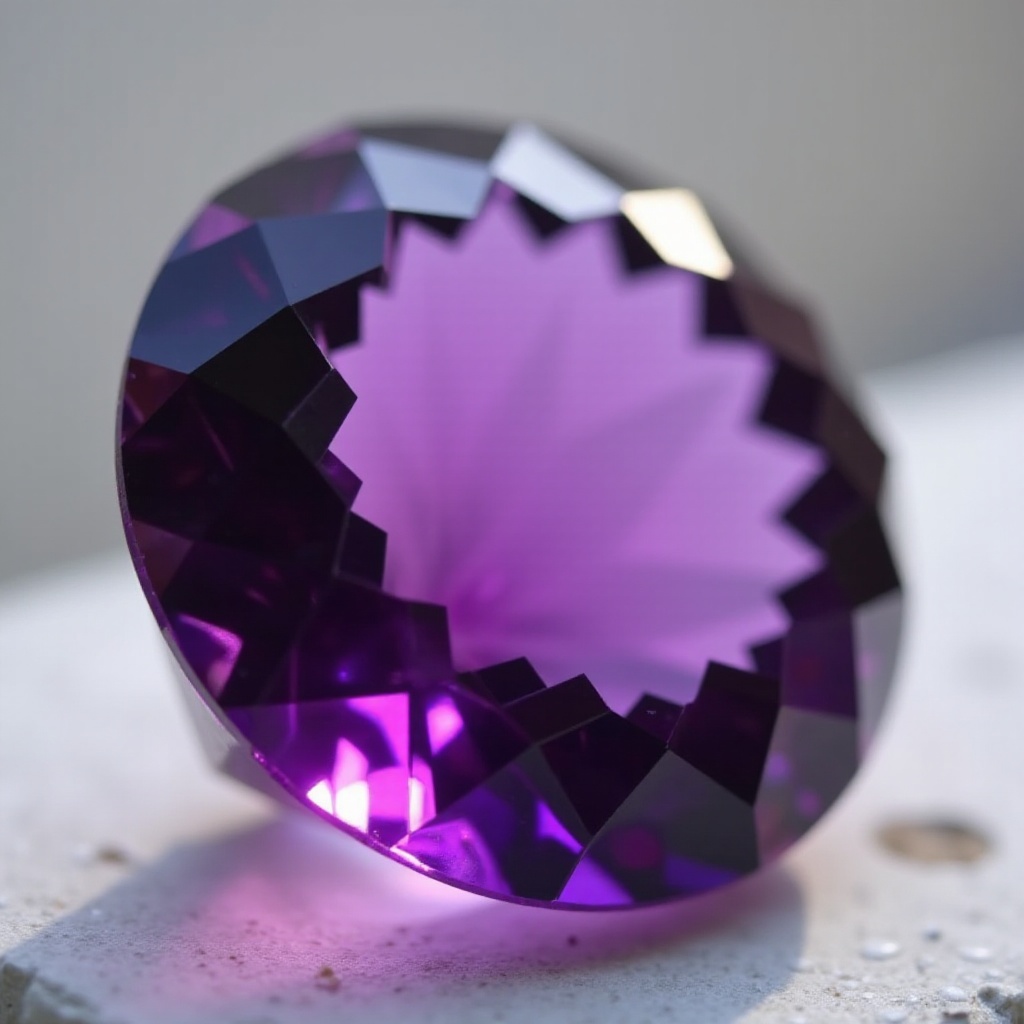
Amethyst is a variety of quartz that is characterized by its purple color, which can range from light lavender to deep violet. The color is caused by the presence of iron and the exposure to natural radiation. It is widely used in jewelry, particularly in rings, necklaces, and earrings, due to its striking appearance and relatively affordable price compared to other gemstones.
Amethyst is also considered a birthstone for February and is believed by some to have healing properties, such as promoting calmness, balance, and peace. It is found in various regions around the world, including Brazil, Uruguay, and Zambia. In terms of hardness, amethyst ranks 7 on the Mohs scale, making it durable for everyday wear.
How Much Amethyst Worth?
Amethyst’s monetary worth varies widely depending on quality, color, clarity, cut, and carat weight. It is considered a semi‑precious gemstone and is generally much more affordable than diamonds or precious stones like ruby or emerald. citeturn0search24
For loose amethyst gemstones, typical retail prices per carat range from about $2–$10+ for basic commercial quality, up to $10–$50+ for good medium to fine quality stones, and $30–$100+ per carat or more for deeply saturated, eye‑clean specimens with exceptional color. citeturn0search11turn0search14
High‑end or collector‑grade amethysts with rare deep purple (“Siberian”) tones can command greater prices, while average amethyst jewelry pieces often fall on the more affordable end of the spectrum. Larger specimens like geodes or museum pieces may be worth hundreds to thousands of dollars, depending on rarity and size. citeturn0search16
Ultimately, the color intensity (deep violet with red/blue flashes) and overall clarity are the biggest drivers of amethyst value on the market. citeturn0search14
What Color Is Amethyst?
Amethyst is known for its stunning purple hues, which can range from light lavender to deep violet. The color of amethyst is caused by the presence of iron and the influence of natural radiation over millions of years.
The most desirable amethyst colors are rich, deep purple shades with a slight bluish or reddish tint. These colors are considered the most valuable, especially if the gem is free of color zoning or irregularities. Amethyst can also show gradations in color, with some stones featuring lighter or darker sections.
The purple color can vary based on its origin, with some regions producing amethysts with more intense, vivid shades. Some stones also exhibit a secondary color, such as red or pink, which can enhance their appearance and value.
Is Amethyst a Quartz?
Yes, amethyst is a variety of quartz. It is a silicate mineral composed primarily of silicon dioxide (SiO2), just like other types of quartz. Amethyst is distinguished by its purple color, which results from trace amounts of iron and natural radiation.
Quartz is one of the most abundant minerals on Earth, and amethyst is the purple-colored variety, falling under the crystalline quartz category. Its color can range from light lavender to deep violet, depending on its mineral composition and exposure to radiation over time.
Is Amethyst a Gemstone?
Yes, amethyst is a gemstone. It is a variety of quartz that is widely used in jewelry due to its beautiful purple color and relatively affordable price compared to other gemstones.
Amethyst is considered a semi-precious gemstone and is one of the most popular gemstones for rings, necklaces, earrings, and bracelets. It is valued for its striking color, which ranges from pale lavender to deep violet, and its availability in a variety of sizes and cuts.
Amethyst is also known for its historical significance, believed by some to have healing properties and symbolic meanings, such as bringing clarity and calmness to the wearer.
What Is the Texture of Amethyst Like?
What Is the Luster of Amethyst?
How Hard Is Amethyst?
Is Amethyst a Mineral?
Is Amethyst a Crystal?
What Is Amethyst Chemical Composition?
Is Amethyst Expensive?
Is Amethyst Rare?
Amethyst, being a variety of quartz, has a smooth and glassy texture. The surface of polished amethyst is typically sleek and reflective, showcasing its rich purple color.
The texture can feel cool to the touch due to its crystalline structure. Amethyst crystals, when left in their natural form, may have rough or jagged edges, especially if they are in clusters or geodes. These natural crystals have a more textured surface, with pointed or irregular facets.
However, when amethyst is cut and polished for jewelry, it adopts a smooth, glossy finish that enhances its aesthetic appeal, making it comfortable for everyday wear.
What Is the Density of Amethyst?
The density of amethyst is approximately 2.65 grams per cubic centimeter (g/cm³). This value is typical for quartz, as amethyst is a variety of quartz, which generally has a density ranging from 2.6 to 2.7 g/cm³.
The density of amethyst can slightly vary depending on its exact chemical composition, impurities, and inclusions. This density makes amethyst a relatively lightweight gemstone, which contributes to its popularity in jewelry applications. It is durable enough for everyday wear but requires proper care to maintain its natural beauty.
Most Expensive Amethyst?
The most expensive amethysts are those with deep, vibrant purple colors, often referred to as Siberian amethysts. These stones exhibit rich purple hues with a slight blue or red tint, which is highly prized by collectors and jewelers.
Amethysts from certain regions, like Zambia and Brazil, are also known for their exceptional quality and can command higher prices. The size, clarity, and overall craftsmanship of the cut can significantly influence the price.
In some cases, amethysts can cost $30 to $100 per carat or more, especially for stones that display vivid color, large size, and minimal inclusions. The most expensive amethysts can be found in fine jewelry settings, including custom rings, necklaces, and pendants.
What Are the Properties of Amethyst?
Amethyst is a violet variety of quartz and has several distinctive properties. It is primarily composed of silicon dioxide (SiO2) and is known for its beautiful purple color, which is caused by iron and natural radiation.
The gemstone has a hardness of 7 on the Mohs scale, making it durable enough for daily wear but still prone to scratching if not properly cared for. Amethyst also exhibits a vitreous (glass-like) luster when polished, enhancing its visual appeal in jewelry.
Amethyst is often considered a semi-precious gemstone and is prized for its clarity, with minimal inclusions being highly sought after. The stone is typically transparent, but some specimens may contain slight cloudiness or internal inclusions.
In addition to its physical properties, amethyst is believed by some to have metaphysical properties, such as promoting tranquility, balance, and healing. It is also the birthstone for February and is widely used in various forms of jewelry, including rings, earrings, and necklaces.
What Does Raw Amethyst Look Like?
Raw amethyst typically appears as irregular, rough crystals or geode-like formations. The crystals often have a pointed or prism-like shape, with angular edges and a shiny, glassy surface. The color can range from pale lavender to deep purple, depending on the quality and type of amethyst.
In its natural state, amethyst may show a mixture of clear and cloudy areas within the crystal, as well as inclusions or fractures. Some pieces may have a translucent or semi-transparent appearance, and the raw form often lacks the smooth finish seen in polished gemstones.
When amethyst is found in clusters, the crystals often grow together, creating a geode-like effect, with multiple points or jagged formations. These clusters may be found inside rocks, often with a rough, unpolished exterior.
Is Amethyst a Crystal or a Gem?
Amethyst is both a crystal and a gemstone. In its natural form, amethyst exists as a crystal, with a unique hexagonal structure and distinct, pointed edges. These crystals can grow in clusters or geodes and are often found in the earth's crust.
However, when amethyst is cut, polished, and used in jewelry, it is referred to as a gemstone. As a gemstone, amethyst is highly valued for its beautiful purple color and durability, making it a popular choice for rings, necklaces, earrings, and other fine jewelry.
So, while amethyst starts as a crystal, it becomes a gemstone when it undergoes processing for decorative and ornamental use.