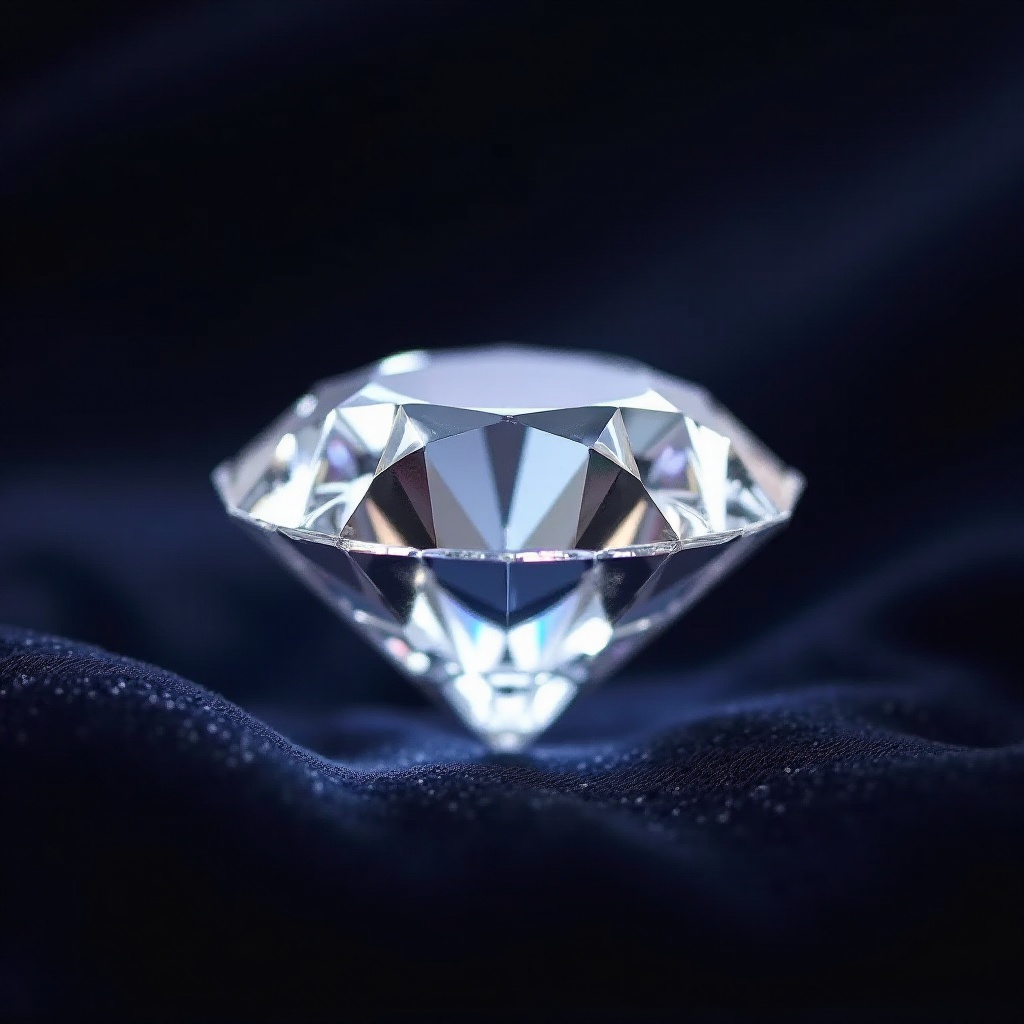
Cubic zirconia (CZ) is a synthetic gemstone made from zirconium dioxide. It closely resembles diamonds but is more affordable. Its brilliance, hardness, and clarity make it a popular choice in jewelry, particularly in engagement rings, earrings, and necklaces.
While CZ is not a natural diamond, its optical properties, including high dispersion and refractive index, mimic diamonds closely. However, cubic zirconia is softer than diamonds and can scratch over time. Despite being man-made, CZ offers a high-quality, cost-effective alternative to diamonds for budget-conscious consumers.
What Is Cubic Zirconia Made of?
Cubic zirconia (CZ) is made from zirconium dioxide (ZrO2), a synthetic material. It is created in a laboratory through a process involving high heat, often combined with stabilizers like yttrium oxide or calcium to improve its structure and durability.
The result is a crystal that mimics the brilliance and clarity of diamonds. CZ is then cut and polished to enhance its optical properties. It is widely used in jewelry due to its diamond-like appearance at a much lower cost.
Is Cubic Zirconia a Mineral?
No, cubic zirconia (CZ) is not a mineral. It is a synthetic gemstone made from zirconium dioxide (ZrO2). Unlike minerals, which occur naturally in the earth, cubic zirconia is man-made in a laboratory environment.
CZ is produced by heating zirconium and other stabilizing agents to high temperatures to create crystals with similar optical properties to diamonds. Although it is a popular alternative to diamonds in jewelry, cubic zirconia does not meet the criteria of a natural mineral.
Is Cubic Zirconia a Real Diamond?
No, cubic zirconia (CZ) is not a real diamond. Although CZ is designed to mimic the appearance of a diamond, it is a synthetic material made from zirconium dioxide (ZrO2), not carbon.
Diamonds are natural gemstones formed under high pressure and temperature over millions of years, while cubic zirconia is created in a laboratory. While CZ shares similar visual properties, such as brilliance and clarity, it is softer and more prone to scratching than a real diamond.
Do Cubic Zirconia Have Inclusions?
Cubic zirconia (CZ) is known for its flawless appearance, often lacking visible inclusions. Unlike natural diamonds, which frequently contain inclusions (also known as "blemishes"), CZ is manufactured to be free of such imperfections, making it look clearer and more brilliant.
While CZ can theoretically contain minor inclusions due to the manufacturing process, they are not typically visible to the naked eye. This quality makes cubic zirconia a popular choice for those seeking a flawless gemstone appearance at a lower cost compared to diamonds.
Is Cubic Zirconia Good?
Cubic zirconia (CZ) is a good option for those seeking a brilliant, diamond-like appearance at an affordable price. It offers impressive clarity, sparkle, and color, making it a popular choice in fashion jewelry, engagement rings, and earrings.
While CZ is not as durable as diamonds and can scratch more easily, it is still a durable gemstone for everyday wear if handled with care. It provides an excellent alternative to diamonds for budget-conscious shoppers without sacrificing the look of luxury.
What Is the Difference Between Diamonds and Cubic Zirconia?
The primary difference between diamonds and cubic zirconia (CZ) lies in their composition and origin. Diamonds are natural gemstones made of carbon, formed under extreme pressure and heat over millions of years. In contrast, cubic zirconia is a synthetic material made from zirconium dioxide in a lab.
Diamonds are significantly harder, ranking 10 on the Mohs scale of hardness, making them more durable and resistant to scratches. CZ, with a hardness of 8-8.5, is softer and more prone to wear over time.
Diamonds also have unique optical properties, such as a higher refractive index, which gives them greater brilliance. While CZ can mimic a diamond's appearance, it does not achieve the same level of sparkle. Additionally, diamonds are much more expensive due to their rarity, while cubic zirconia is a more affordable alternative.
Cubic Zirconia Vs Moissanite:which Is Better?
When comparing cubic zirconia (CZ) and moissanite, the choice depends on individual preferences and priorities. Moissanite is a naturally occurring gemstone made of silicon carbide, while cubic zirconia is a synthetic material made from zirconium dioxide.
Moissanite is harder, with a rating of 9.25 on the Mohs scale, making it more durable than cubic zirconia, which has a rating of 8-8.5. Moissanite also has a higher refractive index, meaning it has more brilliance and fire, giving it a sparkle that is often more intense than CZ.
However, cubic zirconia is significantly more affordable than moissanite. If budget is a primary consideration, CZ offers a similar aesthetic at a fraction of the cost of moissanite.
In terms of overall value, moissanite is generally considered the better choice due to its superior durability and sparkle. However, cubic zirconia is still a great option for those seeking a diamond-like look at a lower price point.
Is Cubic Zirconia a Lab Created Diamond?
No, cubic zirconia (CZ) is not a lab-created diamond. While both are synthetic gemstones, they differ in composition, structure, and properties. Lab-created diamonds are made of carbon, just like natural diamonds, and have the same physical and chemical properties.
Cubic zirconia, on the other hand, is made from zirconium dioxide and has distinct characteristics. Though CZ mimics the appearance of diamonds, it is softer, less durable, and does not possess the same chemical structure as a real diamond.
Therefore, while CZ can provide a similar look to diamonds at a lower cost, it is not a lab-created diamond.
How Hard Is a Cubic Zirconia?
Cubic zirconia (CZ) has a hardness of 8-8.5 on the Mohs scale, making it quite durable, but softer than diamonds, which have a hardness of 10. This means CZ is resistant to scratches under normal wear but may be more prone to damage than harder gemstones.
While CZ can withstand everyday activities like wearing rings or earrings, it can show signs of wear over time, especially if exposed to harsh conditions. For those seeking a durable alternative to diamonds at a lower cost, cubic zirconia offers good hardness but may require more care to maintain its appearance.
Can Cubic Zirconia Cut Glass?
Cubic zirconia (CZ) is not hard enough to cut glass effectively. With a hardness of 8-8.5 on the Mohs scale, CZ can scratch many materials, but it is not as hard as tools specifically designed for cutting glass, such as diamonds or specialized cutting tools.
While CZ may cause scratches on glass surfaces if applied with enough force, it is not a reliable or practical choice for cutting glass. For precise glass cutting, it’s best to use diamond-tipped or other suitable tools.
Is Cubic Zirconia Worth Anything?
Cubic zirconia (CZ) has intrinsic value primarily based on its appearance and cost as a synthetic gemstone. While it is not worth as much as diamonds or other precious stones due to its affordability and mass production, it holds value in the jewelry market as an affordable alternative to diamonds.
The resale value of CZ is generally low, as it is not a rare or natural gemstone. However, CZ can still be considered valuable for those seeking high-quality, affordable jewelry that mimics the appearance of more expensive gemstones.
Ultimately, CZ’s worth is more about its aesthetic appeal and budget-friendly price rather than its material value.
Is Cubic Zirconia Hypoallergenic?
Cubic zirconia (CZ) is generally considered hypoallergenic. It is made from zirconium dioxide and does not contain common allergens such as nickel, which is often found in other metals. This makes it a safer option for individuals with sensitive skin or metal allergies.
However, the hypoallergenic properties can also depend on the metal settings or prongs used in the jewelry, as certain metals like nickel or copper can trigger allergic reactions. If you have sensitive skin, it's essential to ensure that the jewelry setting is made from hypoallergenic materials like sterling silver, platinum, or gold.
Does Cubic Zirconia Get Cloudy?
Cubic zirconia (CZ) can get cloudy over time, primarily due to the buildup of oils, dirt, and cleaning products. Unlike diamonds, CZ is softer and more prone to scratches, which can affect its clarity and shine.
To maintain its brilliance, regular cleaning is necessary. You can clean CZ with a mild soap solution and a soft cloth. However, over time, if not properly cared for, CZ may lose some of its initial sparkle. It's important to protect it from harsh chemicals and abrasives.
Does Cubic Zirconia Pass a Diamond Tester?
Cubic zirconia (CZ) does not pass a diamond tester. Diamond testers work by measuring the thermal conductivity of a gemstone. Diamonds have high thermal conductivity, while cubic zirconia has much lower thermal conductivity, causing it to fail the test.
While CZ looks similar to diamonds, it is made from a different material, zirconium dioxide, and does not share the same physical properties. As a result, a diamond tester will distinguish between a genuine diamond and cubic zirconia based on heat conductivity.
Is Cubic Zirconia Waterproof?
Cubic zirconia (CZ) is water-resistant but not entirely waterproof. It can withstand exposure to water, making it suitable for everyday wear in jewelry, including rings, earrings, and necklaces. However, prolonged exposure to water or harsh conditions could affect its clarity and shine.
Although CZ itself is not damaged by water, it is important to consider the metal setting or other components of the jewelry, as some materials may be more susceptible to corrosion or tarnishing when exposed to moisture.
Does Cubic Zirconia Float?
Cubic zirconia (CZ) does not float in water. With a density of around 5.6 to 5.8 g/cm³, CZ is significantly denser than water, causing it to sink rather than float. This makes it similar to most gemstones, which are also denser than water.
Unlike materials with a lower density, such as certain plastics or woods, CZ will not stay afloat on water's surface. It behaves like other dense materials, sinking when placed in water.
What Is the Downside of Cubic Zirconia?
The main downside of cubic zirconia (CZ) is its lower durability compared to diamonds. With a hardness of 8-8.5 on the Mohs scale, CZ is more prone to scratches and wear over time, especially if exposed to harsh conditions.
Additionally, CZ lacks the same long-term value as diamonds. While it mimics the appearance of a diamond, it does not hold the same resale or investment value. It also tends to lose its sparkle more quickly if not properly maintained.
Lastly, CZ is not as heat-resistant as diamonds, making it more susceptible to damage under extreme temperatures.