Diamond fluorescence refers to the visible light that a diamond emits when exposed to ultraviolet (UV) light. This phenomenon occurs due to the presence of certain minerals in the diamond’s structure that react to UV rays.
Fluorescence can range from faint to strong, with diamonds sometimes glowing blue or other colors under UV light. While fluorescence is not a flaw, it can impact a diamond’s overall appearance. In some cases, diamonds with strong fluorescence may appear milky or hazy in certain lighting conditions, though this is typically more noticeable in lower-quality diamonds.
Some buyers prefer diamonds without fluorescence due to its potential impact on the diamond’s visual appeal, while others find that fluorescence can enhance the diamond's appearance under specific lighting. The presence of fluorescence does not necessarily affect the diamond's value unless it significantly impacts its visual quality.
Do Diamonds Glow Under Black Light?
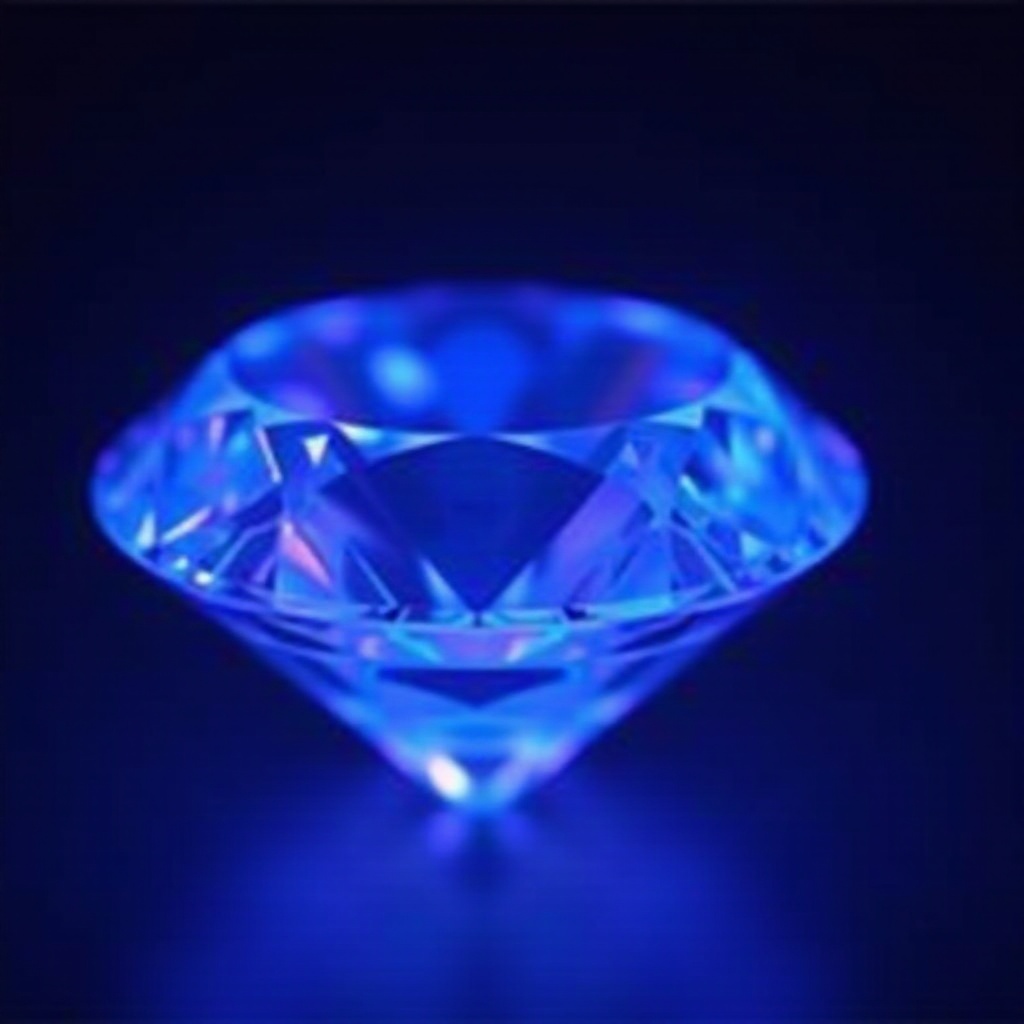
Diamonds can glow under black light due to a phenomenon known as fluorescence. When exposed to ultraviolet (UV) or black light, some diamonds emit a visible light, typically blue, but they can also glow in other colors.
The intensity of fluorescence varies between diamonds, with some showing no glow, while others may exhibit a faint or strong glow. The presence of fluorescence is influenced by trace elements within the diamond's structure. While fluorescence does not affect a diamond’s fundamental quality, it may impact its appearance under certain lighting conditions.
Diamonds with strong fluorescence may appear milky or hazy under regular lighting, which could influence a buyer’s perception. However, many diamonds exhibit fluorescence with minimal visible effects, especially in higher-quality stones. Fluorescence is not inherently negative but can sometimes affect the value of the diamond depending on the strength and visual impact.
Why Do Diamonds Glow Under Uv Light?
Diamonds glow under UV light due to fluorescence, which occurs when the diamond absorbs ultraviolet (UV) radiation and re-emits it as visible light. This phenomenon is caused by trace elements in the diamond's structure, such as boron or nitrogen.
When UV light interacts with a diamond, the energy excites the atoms within, causing them to release energy in the form of visible light. This visible light is typically blue, though diamonds can emit other colors based on their chemical composition.
Not all diamonds exhibit fluorescence, and the intensity can vary, ranging from faint to strong. Diamonds with fluorescence may appear differently in natural lighting, especially if the fluorescence is strong enough to create a milky or hazy appearance, though this effect is more noticeable in lower-quality stones.
What Causes Fluorescence in Diamonds?
Fluorescence in diamonds is caused by the presence of trace elements within the diamond's crystal structure. The most common elements responsible are nitrogen and boron, which can absorb ultraviolet (UV) light and re-emit it as visible light.
When a diamond is exposed to UV radiation, these trace elements absorb the energy and become excited. This energy is then released as light, creating the visible fluorescence effect. The color of the fluorescence can vary, but it is most commonly blue, though other colors such as yellow or green can also occur.
The intensity of fluorescence varies, with some diamonds showing faint fluorescence while others exhibit strong fluorescence. The occurrence and strength of fluorescence are natural and do not affect the diamond’s inherent beauty, though they can influence its appearance under different lighting conditions.
What Does It Mean When Diamonds Glow Under Uv Light?
When diamonds glow under UV light, it means the diamond exhibits fluorescence. This happens when the diamond absorbs ultraviolet (UV) light and re-emits it as visible light. The glowing effect can range from faint to strong, depending on the diamond.
The fluorescence is caused by trace elements, such as nitrogen or boron, within the diamond's structure. Most diamonds that glow under UV light will emit a blue hue, though other colors like yellow or green are also possible.
Fluorescence does not affect the diamond’s overall quality but can impact its appearance under certain lighting. In some cases, diamonds with strong fluorescence may appear milky or hazy in natural light, which may influence their visual appeal. However, this effect is more noticeable in diamonds of lower quality.
Is Fluorescence in a Diamond Bad?
Fluorescence in a diamond is not inherently bad, but it can affect the diamond’s appearance and value in certain circumstances. Fluorescence occurs when a diamond emits visible light under UV light due to trace elements within the stone.
In most cases, fluorescence is faint and barely noticeable, with little impact on the diamond’s overall look. However, diamonds with strong fluorescence can sometimes appear milky or hazy, especially in natural light. This effect may be more pronounced in diamonds of lower quality.
For high-quality diamonds, fluorescence is generally not a concern, as its impact on the appearance is minimal. In fact, some buyers may even find fluorescence attractive, as it can enhance the diamond's visual appeal in certain lighting conditions.
Fluorescence may slightly affect a diamond’s value, particularly if it causes noticeable visual flaws. Therefore, it’s important to consider the intensity of fluorescence when purchasing a diamond, especially if you prefer a flawless appearance.
Is Diamond Fluorescence Good or Bad?
Diamond fluorescence can be both good and bad, depending on the intensity and how it affects the diamond's appearance. Fluorescence occurs when a diamond emits visible light under UV light, caused by trace elements like nitrogen or boron.
For many diamonds, fluorescence is faint and has no noticeable impact on their appearance. In such cases, it’s neither good nor bad and typically doesn’t affect the value. However, diamonds with strong fluorescence may appear hazy or milky, especially in natural light. This can negatively impact the diamond's visual appeal, especially in lower-quality stones.
On the positive side, some buyers appreciate fluorescence for the unique glow it gives the diamond under UV light, which can enhance its beauty in certain lighting conditions. In high-quality diamonds, fluorescence is less likely to cause significant visual issues.
Ultimately, whether fluorescence is good or bad depends on your personal preference, the diamond’s quality, and the intensity of the fluorescence.
How Do Diamonds Get Fluorescence?
Diamonds get fluorescence from trace elements within their crystal structure, primarily nitrogen or boron. When the diamond is exposed to ultraviolet (UV) light, these elements absorb the UV energy and re-emit it as visible light, creating the fluorescence effect.
The presence of these trace elements in the diamond’s composition is natural and occurs during the formation of the diamond under high-pressure and high-temperature conditions. The intensity of the fluorescence depends on the concentration and type of trace elements present.
Fluorescence can range from faint to strong, and it can produce different colors of visible light, though blue is the most common. Some diamonds may exhibit fluorescence due to impurities or radiation exposure during their long geological history. This fluorescence does not affect the diamond’s structural integrity but can influence its visual appearance under specific lighting conditions.
Are Diamonds with Fluorescence Cheaper?
Diamonds with fluorescence are often cheaper, but the price difference depends on the intensity of the fluorescence and the overall quality of the diamond. Fluorescence can slightly reduce a diamond’s value, particularly if it’s strong enough to cause a milky or hazy appearance.
For diamonds with faint or no visible fluorescence, the price typically remains unaffected. However, diamonds with strong fluorescence may be priced lower due to the potential negative impact on their visual appeal under natural light. This is especially true for lower-quality diamonds where the fluorescence may be more noticeable.
On the other hand, some buyers appreciate fluorescence, and diamonds with it can be a good value if the effect is subtle. High-quality diamonds with strong fluorescence are less common, and their price may not always be significantly lower. The key is to balance fluorescence with other factors like cut, clarity, and carat weight when evaluating a diamond’s price.
How to Check If a Diamond Has Fluorescence?
To check if a diamond has fluorescence, the most reliable method is to expose the diamond to ultraviolet (UV) light, often referred to as black light. Fluorescence occurs when the diamond absorbs UV light and re-emits it as visible light.
Under UV light, the diamond will glow if it exhibits fluorescence. Most diamonds with fluorescence will emit a blue glow, but other colors such as yellow or green can also occur. The intensity of the glow can vary, from faint to strong.
Jewelry stores or gemologists often use UV lamps to test fluorescence. Additionally, diamond certification reports, such as those from the Gemological Institute of America (GIA), typically indicate whether a diamond has fluorescence and its intensity level, ranging from none to strong. This is an important factor to consider when purchasing a diamond, as fluorescence can affect the diamond's appearance under certain lighting conditions.
Does Fluorescence Impact Resale Value?
Fluorescence can impact the resale value of a diamond, though its effect varies depending on the intensity and the diamond's overall quality. Diamonds with strong fluorescence may have a lower resale value, particularly if the fluorescence causes a noticeable milky or hazy appearance.
For diamonds with faint fluorescence, the impact on resale value is typically minimal, as the effect is subtle and often not noticeable in regular lighting. However, diamonds with no fluorescence or very faint fluorescence are usually preferred by buyers, and they tend to retain higher resale value.
Fluorescence’s effect on resale value is more prominent in lower-quality diamonds, where the fluorescence can be more apparent. High-quality diamonds, especially those with strong fluorescence, may not see a significant drop in value. Ultimately, the impact on resale depends on buyer preferences and market trends, with some buyers viewing fluorescence as a unique feature while others may prefer diamonds without it.