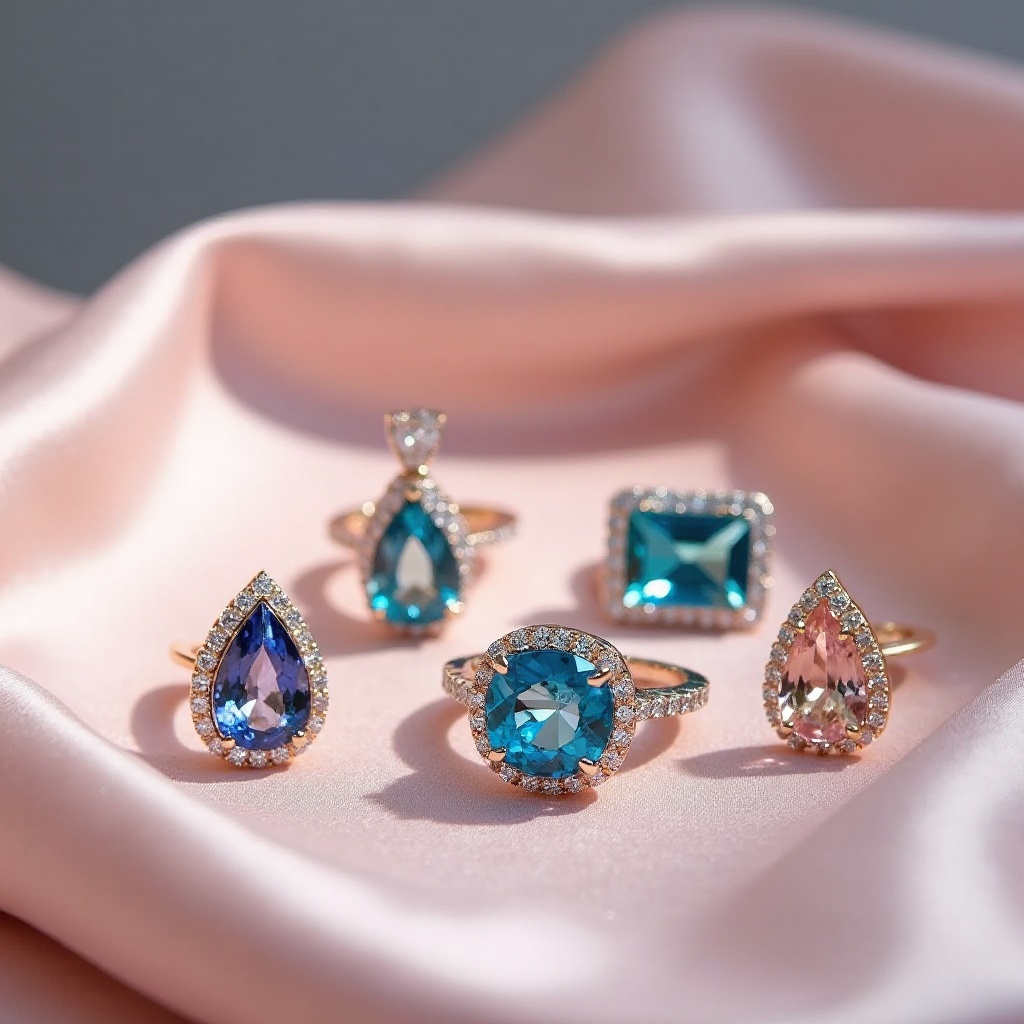
Topaz jewelry refers to accessories, such as rings, necklaces, earrings, and bracelets, that feature topaz gemstones. Topaz is a naturally occurring mineral known for its wide range of colors, including blue, yellow, pink, and clear.
It is a durable stone, making it suitable for various jewelry types. Often used for its vibrant hues, topaz is considered a symbol of strength and protection. Blue topaz is especially popular in modern designs.
Topaz jewelry is frequently chosen for both special occasions and everyday wear. The gemstone's beauty and versatility make it a popular choice among jewelers, especially in engagement rings and statement pieces.
What Birthstone Is Topaz?
Topaz is the birthstone for the month of November. It is commonly associated with qualities like strength, love, and good health.
As a birthstone, topaz is believed to bring positive energy, calm, and joy to those born in November. Blue topaz, in particular, is often chosen as a more modern variation of this birthstone, symbolizing wisdom and creativity.
Topaz's vibrant range of colors, including blue, yellow, and pink, makes it a popular choice for jewelry, especially in personalized birthstone pieces.
What Does Topaz Look Like?
Topaz is a crystalline gemstone that comes in various colors, including blue, yellow, pink, green, and colorless. Its appearance is often transparent or translucent, with a brilliant luster that catches light beautifully.
The most common topaz is blue, ranging from pale sky blue to deep, vibrant hues. Yellow topaz is another popular variation, typically golden or honey-colored.
Topaz is known for its clarity, often free of visible inclusions, which contributes to its appealing shine and clean, crisp look. Its natural facets enhance its brilliance, making it a favorite for jewelry pieces.
Is Topaz a Gemstone?
Yes, topaz is a gemstone. It is a silicate mineral that comes in a wide variety of colors, including blue, yellow, pink, and clear.
Topaz is highly valued in the jewelry industry due to its durability, clarity, and brilliant luster. It ranks 8 on the Mohs scale of hardness, making it a suitable choice for various types of jewelry, such as rings, necklaces, and earrings.
Its vibrant colors and versatility make topaz a popular gemstone for both fashion and fine jewelry.
Is Citrine the Same As Topaz?
Citrine and topaz are not the same, though they are often confused due to their similar appearance. Both gemstones come in yellow to orange hues, but they differ in their chemical composition.
Citrine is a variety of quartz, while topaz is a silicate mineral. Citrine tends to have a more translucent appearance, while topaz is typically clearer and more transparent.
In terms of hardness, topaz is harder, ranking 8 on the Mohs scale, while citrine ranks 7. Both gemstones are popular in jewelry but are distinct in their properties and origins.
What Is the Hardness of Topaz?
Topaz ranks 8 on the Mohs scale of hardness, making it a relatively hard and durable gemstone.
This places it just below sapphire and ruby, which rank 9 on the scale. Due to its hardness, topaz is suitable for various types of jewelry, including rings, necklaces, and earrings, as it resists scratching and damage.
Its durability makes topaz an excellent choice for daily wear, offering both beauty and long-lasting wearability in fine jewelry.
Is Topaz Expensive?
Topaz is generally not as expensive as some other gemstones like diamonds, rubies, or emeralds. However, its price can vary based on factors such as color, size, clarity, and overall quality.
Blue topaz, being more abundant, is relatively affordable, while rare colors like imperial topaz (a golden-orange variety) can be significantly more expensive. The size and cut of the gemstone also play a role in its pricing.
In summary, topaz can be both affordable and expensive, depending on the specific variety and quality.
Is Topaz Valuable?
Topaz can be valuable, but its worth varies depending on factors like color, size, clarity, and rarity.
While common varieties like blue topaz are relatively affordable, rarer colors such as imperial topaz (a rich golden-orange) can be quite valuable. The larger and clearer the stone, the more expensive it becomes.
In general, topaz is not as valuable as diamonds, rubies, or sapphires, but high-quality specimens, especially those in rare colors, can fetch significant prices.
What Does Topaz Symbolize?
Topaz is often associated with qualities like strength, love, and protection. It is believed to promote healing, balance, and positive energy.
In various cultures, topaz symbolizes wisdom, clarity, and creativity. It is thought to bring calmness and help with decision-making.
Blue topaz, in particular, is known for symbolizing communication and harmony, while yellow topaz is linked to wealth and prosperity. As a birthstone for November, it is also considered a symbol of joy and good fortune.
Where Is Topaz Found?
Topaz is found in various locations around the world, including Brazil, Russia, Sri Lanka, and the United States. Brazil is the largest producer of topaz, particularly known for its vibrant blue and imperial topaz varieties.
Other notable sources include Pakistan, Afghanistan, and several African countries like Nigeria and Zambia. Topaz can also be found in parts of Australia, Myanmar, and Mexico.
These regions provide different varieties of topaz, each with unique colors and qualities, making the gemstone widely available in the jewelry market.
How Does Topaz Form?
Topaz forms under specific conditions deep within the Earth’s crust. It is a silicate mineral that crystallizes in an environment with high temperatures and pressures.
Topaz forms when gases rich in aluminum and fluorine come into contact with silica-rich magma. Over time, this combination results in the formation of large, clear crystals. These crystals then cool and solidify.
The color variations of topaz are caused by trace elements such as iron, which affect its appearance. Natural topaz forms over millions of years, and its beautiful colors are a result of the unique conditions in which it develops.
What Is Topaz Used for?
Topaz is primarily used in jewelry, including rings, necklaces, earrings, and bracelets. Its vibrant colors and durability make it a popular choice for both fashion and fine jewelry.
Beyond adornment, topaz is believed to have metaphysical properties, symbolizing strength, love, and protection. Some people use topaz in meditation to enhance creativity and clarity.
Topaz is also used in industrial applications due to its hardness, such as in abrasives and cutting tools, though its use in this field is less common than in jewelry.
Is Topaz a Precious Gemstone?
Topaz is considered a semi-precious gemstone, rather than a precious one like diamonds, rubies, sapphires, and emeralds.
While it is highly valued for its beauty, durability, and range of colors, it does not reach the same level of rarity or market demand as the "precious" gemstones.
However, topaz, especially in its rare forms like imperial topaz, can still be expensive and highly sought after in the jewelry industry.
Is Topaz a Quartz?
No, topaz is not a type of quartz. While both are silicate minerals, topaz and quartz belong to different mineral groups.
Topaz is a fluorine aluminum silicate, while quartz is made of silicon dioxide. Quartz is typically harder and more abundant than topaz, and it has different physical properties.
Though both gemstones are commonly used in jewelry, topaz and quartz are distinct minerals with unique characteristics and compositions.
How to Identify Raw Topaz?
Identifying raw topaz can be done by examining its physical characteristics. Raw topaz typically appears as a transparent or translucent crystal with sharp edges and a prismatic shape.
Topaz has a distinct hardness, ranking 8 on the Mohs scale, so it can scratch glass or steel. When examining the color, topaz comes in shades of blue, yellow, pink, and colorless.
Another key feature is its cleavage; topaz has perfect cleavage in one direction, meaning it breaks in flat, smooth planes. To confirm the mineral, a professional gemologist can perform tests like specific gravity measurements and X-ray diffraction.
What Are the Healing Properties of Topaz?
Topaz is believed to have several healing properties, both physical and emotional. It is thought to promote relaxation, calmness, and mental clarity.
Emotionally, topaz is believed to encourage positivity, alleviate stress, and enhance creativity. It is often associated with the ability to help manifest intentions and clear negative energy.
Physically, topaz is said to support the healing of digestive issues, boosting metabolism, and strengthening the immune system. It is also thought to help with improving circulation and reducing inflammation.
While these claims are not scientifically proven, topaz is considered a spiritual stone in many cultures for its healing potential.
Is Mystic Topaz Natural?
Mystic topaz is not a natural gemstone; it is a treated form of topaz. The stone undergoes a treatment process where a thin layer of titanium or another metal is applied to the surface, creating a rainbow-like effect.
This treatment enhances the natural color of the topaz, giving it vibrant hues of blue, green, pink, and purple. While mystic topaz is still topaz at its core, the colorful effect is man-made, not naturally occurring.
As a result, mystic topaz is often more affordable than natural multicolored gemstones but still offers a striking visual appeal.
How to Tell If a Topaz Is Real?
To tell if a topaz is real, first examine its physical characteristics. Genuine topaz has a hardness of 8 on the Mohs scale, meaning it can scratch glass but not be scratched by a steel knife.
Check the clarity and color. Topaz is known for being clear and transparent, often free of inclusions. It can come in shades like blue, yellow, or colorless.
Another test involves the stone's weight. Real topaz is denser than many other gemstones, so it may feel heavier than similar-sized stones.
For a more accurate determination, you can have the stone tested by a gemologist, who can use specific tests like refractive index or spectroscopy to confirm its authenticity.