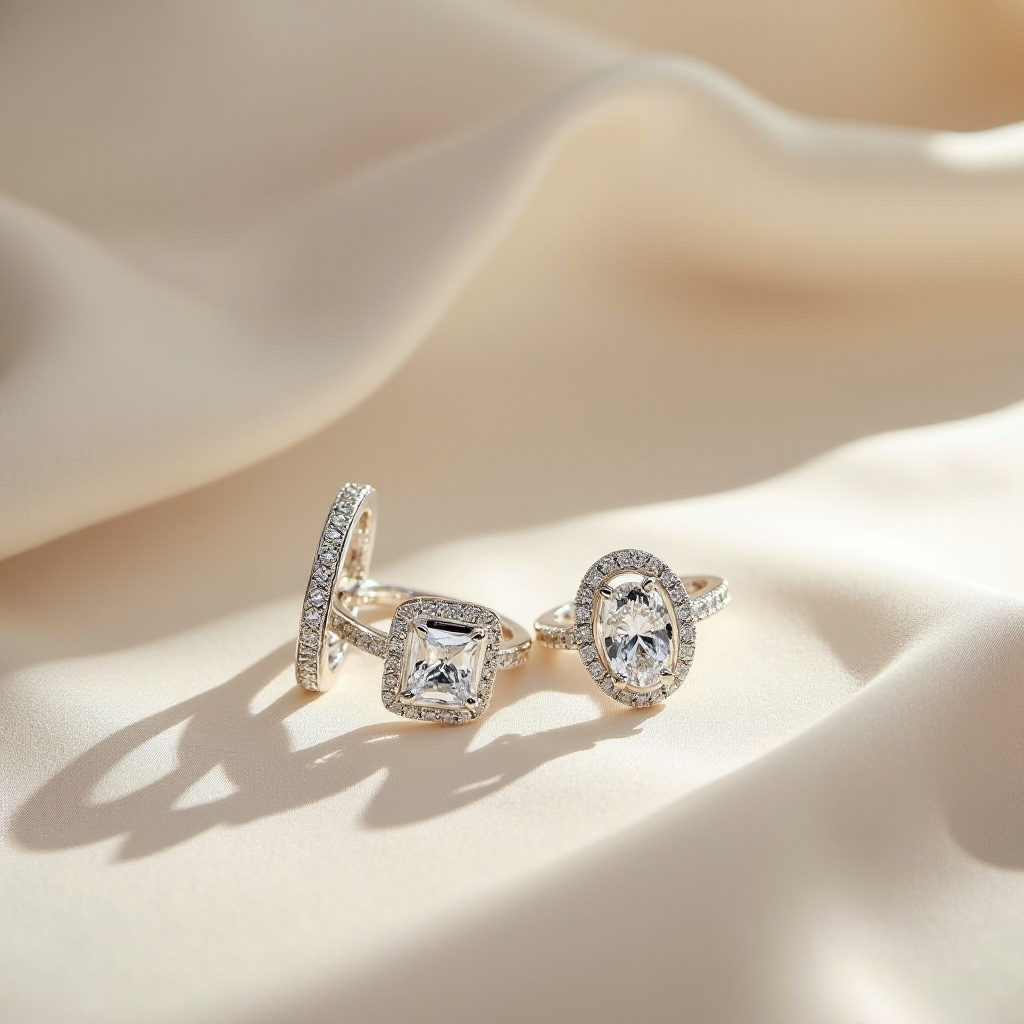
White gold jewelry is a type of gold alloy that is mixed with other metals such as palladium, silver, or nickel to give it a white appearance. Unlike yellow gold, which maintains its natural golden hue, white gold requires additional plating, usually with rhodium, to enhance its shine and durability.
The composition of white gold varies depending on the specific alloy, but it typically contains around 75% gold, with the remaining percentage made up of the added metals.
White gold offers a sleek and modern look, making it popular for engagement rings, wedding bands, and other fine jewelry pieces. Over time, the rhodium plating may wear off, requiring re-plating to maintain its bright, white finish.
What Is White Gold Made of?
White gold is made by alloying yellow gold with other metals such as palladium, silver, nickel, or platinum. This combination gives the gold a white or silvery appearance.
Typically, white gold contains around 75% pure gold, which is the standard for 18-karat gold, with the remaining percentage made up of these alloying metals.
To enhance its shine and durability, white gold is often plated with rhodium. Over time, the rhodium coating may wear off, requiring periodic re-plating to maintain the jewelry’s bright, white appearance.
14k Vs 18k White Gold: What’s the Difference?
The primary difference between 14k and 18k white gold lies in the gold content. 18k white gold contains 75% pure gold, while 14k white gold contains 58.3% pure gold, with the remaining percentage made up of other metals.
As 18k white gold has a higher gold content, it tends to be more expensive and offers a richer, more vibrant color. It is also slightly softer, making it more prone to scratches over time.
On the other hand, 14k white gold is more durable due to the higher percentage of alloyed metals, making it more resistant to wear and tear. However, it has a slightly less intense gold color than 18k.
Both types of white gold are often plated with rhodium for added shine and protection, but 18k is generally preferred for high-end pieces like engagement rings.
How Is White Gold Created?
White gold is created by alloying pure yellow gold with other metals such as palladium, silver, nickel, or platinum. This combination changes the color of the gold to a white or silvery tone.
Typically, 14k or 18k white gold is used, where the gold content makes up 58.3% or 75%, respectively, with the rest being other metals. The alloying process enhances the durability and strength of the gold.
To achieve a bright, shiny finish, white gold jewelry is often plated with rhodium, a silvery-white metal. Over time, this rhodium coating may wear off, requiring re-plating to maintain its appearance.
Is White Gold Real Gold?
Yes, white gold is real gold. It is made by alloying pure yellow gold with other metals, such as palladium, nickel, or platinum, to give it a white or silvery appearance.
While white gold contains gold, the alloyed metals are added to enhance its durability and strength. The gold content in white gold is typically 14k (58.3% gold) or 18k (75% gold), meaning it retains a significant amount of gold.
However, unlike yellow gold, white gold is often plated with rhodium to achieve a bright, shiny finish, which may require re-plating over time. Despite this, white gold remains a legitimate form of gold jewelry.
Is White Gold Natural?
White gold is not a naturally occurring metal; it is an alloy created by mixing pure yellow gold with other metals like palladium, nickel, or platinum.
While gold itself is a natural element, the white color of white gold is a result of the alloying process. The addition of these metals changes the appearance of gold, giving it a white or silvery hue.
To enhance its appearance, white gold is often plated with rhodium, a shiny, white metal. However, the natural properties of gold remain a significant part of white gold's composition.
What's in White Gold?
White gold is an alloy primarily made of pure yellow gold mixed with other metals such as palladium, nickel, platinum, or silver. These alloying metals give white gold its white or silvery appearance.
Typically, white gold contains 58.3% gold in 14k white gold or 75% gold in 18k white gold. The remaining percentage consists of the added metals, which enhance its strength and durability.
To achieve a bright, shiny finish, white gold is usually plated with rhodium. This rhodium plating helps to improve its appearance but can wear off over time, requiring re-plating.
What Makes White Gold White?
White gold gets its white appearance from the alloying process. Pure yellow gold is mixed with metals such as palladium, nickel, platinum, or silver. These metals have a naturally lighter or silvery color, which alters the overall hue of the gold.
In addition, white gold is often plated with rhodium, a shiny white metal, to enhance its bright, white finish. The rhodium plating contributes to the appearance of white gold but can wear off over time, requiring re-plating.
The combination of these alloy metals and rhodium gives white gold its characteristic white or silvery color.
How to Know If White Gold Is Real?
To determine if white gold is real, check for specific markings or stamps. Authentic white gold typically has a stamp indicating its purity, such as 10k, 14k, 18k, or 24k. This number represents the percentage of gold in the alloy.
Additionally, real white gold is often plated with rhodium for a bright finish, but it will show signs of wear over time. If the piece is discolored or scratched, it may indicate it’s not genuine.
You can also take the piece to a jeweler for an acid test or use a magnet. Since gold is not magnetic, a response from the magnet may suggest the jewelry is not real gold. However, the best way to confirm authenticity is to seek professional verification from a reputable jeweler.
How to Test White Gold?
To test white gold, start by checking for purity marks. Genuine white gold will typically have a stamp such as 10k, 14k, or 18k, indicating the percentage of gold content.
You can also perform a magnet test. Gold is non-magnetic, so if a magnet attracts the jewelry, it's likely not pure white gold.
A professional acid test can provide more accuracy. Jewelers use a special acid to test the gold's authenticity without damaging the piece.
Finally, you can check for signs of rhodium plating. White gold is often plated with rhodium, which may wear off over time. If the gold underneath appears yellowish or tarnished, this could be an indicator of authenticity.
How Much Is White Gold Per Ounce?
The price of white gold per ounce depends on the current market price of gold and the specific alloy composition used in the white gold. As of recent trends, the price of gold per ounce typically ranges between $1,800 and $2,000 USD.
Since white gold is an alloy, its price is influenced by the percentage of pure gold mixed with other metals like palladium or nickel. The cost will vary based on whether it is 14k, 18k, or another karat value.
To get an accurate estimate, check the current market price of gold and adjust based on the karat weight and any additional costs, such as rhodium plating.
Can You Be Allergic to White Gold?
Yes, it is possible to be allergic to white gold. The allergic reaction typically occurs due to the metals alloyed with the gold, such as nickel. Nickel is a common allergen, and many white gold alloys contain it to enhance durability and strength.
While 18k and 14k white gold are made with a higher percentage of gold, they still may contain nickel, which can cause skin irritation or allergic reactions in sensitive individuals.
If you have a known nickel allergy, it's advisable to seek white gold jewelry that is specifically labeled as nickel-free or opt for alternatives like platinum or palladium.
What Karat Is White Gold?
White gold is available in various karat options, most commonly 14k and 18k. The karat number refers to the amount of pure gold in the alloy.
- 14k white gold contains 58.3% pure gold, with the remaining percentage made up of other metals like palladium, nickel, or platinum.
- 18k white gold contains 75% pure gold, with the rest being alloyed metals that give it strength and durability.
The higher the karat, the greater the amount of pure gold in the white gold alloy, which generally affects its color, price, and softness.
Does White Gold Change Color?
Yes, white gold can change color over time. White gold is often plated with rhodium, a shiny, silvery metal, to enhance its bright white appearance. However, this rhodium plating can wear off with regular use, revealing the natural yellowish hue of the gold underneath.
Additionally, exposure to chemicals, lotions, or harsh cleaning agents may cause discoloration or tarnishing. As the rhodium plating fades, white gold may take on a slightly dull or yellowish tone.
To maintain its appearance, white gold may require periodic re-plating with rhodium.
Is White Gold and Diamond Same?
No, white gold and diamonds are not the same. White gold is a type of gold alloy made by mixing pure yellow gold with other metals like palladium, nickel, or platinum. It is used primarily for making jewelry settings, such as rings, necklaces, and bracelets.
Diamonds, on the other hand, are precious gemstones made of pure carbon that are naturally formed under high pressure and temperature deep within the Earth. They are known for their brilliance and hardness.
While white gold is often used as the setting material for diamond jewelry, they are distinct in composition, properties, and appearance.
What Are the Pros and Cons of 18k White Gold?
Pros of 18k White Gold: - High Gold Content: With 75% pure gold, 18k white gold has a rich, warm tone while maintaining durability. - Durability: It offers a balance between gold purity and strength, making it ideal for daily wear. - Luxurious Look: The bright, polished finish of 18k white gold gives jewelry a premium, high-quality appearance.
Cons of 18k White Gold: - Price: 18k white gold is more expensive than lower-karat options due to the higher gold content. - Softness: Though more durable than higher-karat gold, it is softer than 14k gold, making it more susceptible to scratches over time. - Rhodium Plating: 18k white gold is often rhodium-plated, which can wear off, requiring periodic re-plating to maintain its bright white finish.
How Much Is a 10k White Gold Ring Worth?
A 10k white gold ring’s worth varies widely based on gold content, weight, design, brand, and any gemstones. As scrap metal, 10k white gold contains ~41.7% pure gold, so its melt value is tied to the current gold price. On average, the intrinsic metal value of a simple 10k white gold ring’s gold content often falls roughly between about $125 and $300, depending on weight and market rates. citeturn0search0turn0search1
However, the actual resale or retail value can be higher. A basic 10k white gold ring might sell new for around $125–$200, while branded or more intricately crafted rings can range from several hundred to over $700–$2,500. citeturn0search1turn0search3
If your ring includes diamonds or other stones, quality and size significantly increase its worth beyond the gold alone. Professional appraisal is recommended for the most accurate valuation.
White Gold Replating Near Me?
A 10k white gold ring’s worth varies widely based on gold content, weight, design, brand, and any gemstones. As scrap metal, 10k white gold contains ~41.7% pure gold, so its melt value is tied to the current gold price. On average, the intrinsic metal value of a simple 10k white gold ring’s gold content often falls roughly between about $125 and $300, depending on weight and market rates. citeturn0search0turn0search1
However, the actual resale or retail value can be higher. A basic 10k white gold ring might sell new for around $125–$200, while branded or more intricately crafted rings can range from several hundred to over $700–$2,500. citeturn0search1turn0search3
If your ring includes diamonds or other stones, quality and size significantly increase its worth beyond the gold alone. Professional appraisal is recommended for the most accurate valuation.